Let’s be honest. If you have been in digital marketing for even a couple of years, you already know how quickly things can flip on their head. One algorithm update, one new platform, one shift in consumer behaviour — and suddenly everything you thought you knew needs a rethink.
2026 is no different. If anything, the pace of change has kicked up a notch. But here’s the good news — the fundamentals still matter. Great content, genuine connection, and a deep understanding of your audience will never go out of style. What’s changing is how you deliver all of that.
So let’s get into what’s actually working in digital marketing right now, straight from the team at GICT – Global Institute Of Computer Technologies, where we train marketers to stay ahead of exactly these kinds of shifts.
AI is Your New Colleague — Not Your Replacement
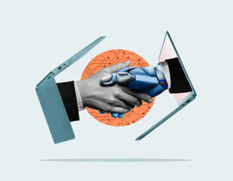
Okay, let’s address the elephant in the room first. AI. Everyone is talking about it, and rightly so. But the conversation has moved way past “will AI replace marketers?” In 2026, the real question is: are you using AI well?
Marketing teams are using AI to analyse customer behaviour, test ad creatives faster than ever, generate content variations, and optimise campaigns on the fly. What used to take a week of A/B testing can now happen in hours. According to IE Business School’s 2026 digital marketing trends report, AI now sits at the strategic centre of how campaigns are planned and executed — not just the execution layer.
But here’s what separates the good marketers from the great ones: knowing how to direct AI, not just use it. The creativity, the strategy, the human judgment — that still has to come from you. AI just helps you move faster and smarter.
Personalisation Has Raised the Bar — Significantly
Here’s a stat that should make every marketer sit up: 75% of consumers are more likely to buy from a brand that personalises its content and communication (source: IE Business School Digital Marketing Trends Report, 2026). That is not a small number.
And we are not talking about just putting someone’s first name in an email subject line. That trick is older than Instagram. Real personalisation in 2026 means using live behavioural data, purchase history, and predictive AI to serve people the right message at the right moment on the right platform.
If your campaigns still feel like you’re shouting at a crowd rather than talking to a person, that’s worth fixing. The brands winning right now are the ones that make their audience feel understood.
Your Own Data is Now Your Greatest Asset
Third-party cookies are effectively dead. Privacy regulations are tightening across the globe. And the marketers who saw this coming and started building their first-party data strategies early? They are absolutely cleaning up right now.
First-party data — the information your customers willingly share with you through sign-ups, purchases, surveys, and interactions — is now the foundation of effective targeting and personalisation. According to Experian’s 2026 Digital Trends Report, brands that have built robust first-party data systems are seeing better targeting, stronger personalisation, and more accurate measurement across all channels.
The lesson here? Grow your email list. Build your community. Create reasons for people to share their data with you willingly. It will be worth more than any third-party audience segment money can buy.
Short-Form Video is Still King — But Now it Sells Too
Nobody is surprised that short-form video is still dominating in 2026. What is interesting is how it has evolved. It is no longer just a brand awareness play — it is a direct sales channel.
Social commerce — the ability to discover, evaluate, and buy products without ever leaving a social app — is growing at a pace that is genuinely exciting. Research from Deloitte Digital’s 2026 Marketing Trends report shows that a majority of consumers now say social content and community recommendations are how they first discover new brands. Search comes later, mainly for validation.
What does this mean practically? Your Instagram Reels and YouTube Shorts need a strategy behind them, not just vibes. Think about how each video moves someone from discovery to decision. And make it feel real — over-produced content is losing ground fast to authentic, lo-fi storytelling.
SEO Looks Different in the Age of AI Search
If you have Googled anything lately, you have probably noticed the AI-generated summaries sitting above all the traditional search results. This is Google’s AI Overview feature, and it is fundamentally changing how organic traffic flows.
The new goal for SEO is not just to rank — it is to become the source that AI systems trust and cite. This means structuring your content to answer specific questions clearly, building genuine topical authority, and earning high-quality backlinks from credible websites.
Despite all these changes, paid search is holding strong. HubSpot’s 2026 State of Marketing report notes that over 75% of marketers plan to maintain or increase their investment in search and display ads. High intent still converts — you just need to make sure your landing pages are good enough to deserve it.
The bottom line: SEO is not dead, it is just more sophisticated. And that makes it a brilliant skill to have in your toolkit.
Micro-Influencers are Outperforming Mega-Stars
The era of throwing money at celebrities with millions of followers and hoping for the best is fading. Brands are learning — some the hard way — that engagement and trust matter far more than follower counts.
Micro-influencers, people with audiences of 5,000 to 100,000 who are deeply embedded in specific communities, are delivering results that big-name influencers simply cannot match. Their audiences trust them. They feel like real people, not advertisements.
Kantar’s 2026 Marketing Trends research highlights micro-communities as one of the defining shifts of this year. For brands on a budget — which is most brands — this is actually great news. You do not need a massive influencer budget to make influencer marketing work. You need the right people talking to the right audience.
Mobile Is Not a Feature. It Is the Default.
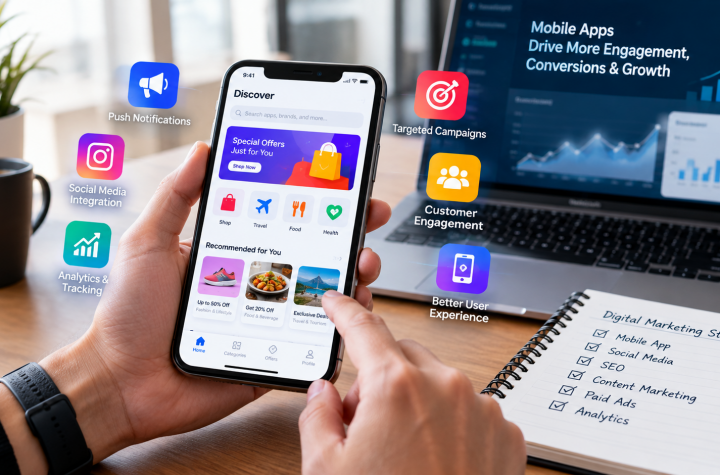
More than 60% of all global website traffic comes from mobile devices (SimilarWeb, 2023). Nearly seven billion smartphones are in use worldwide. And yet, you would be amazed how many websites and email campaigns are still built with desktop as the primary experience.
In India especially, where the vast majority of internet users access the web through their phones, mobile-first is not a best practice — it is table stakes. If your website loads slowly on mobile, if your emails look broken on a small screen, if your checkout process requires pinching and zooming — you are losing customers you worked hard to attract.
Ready to Actually Learn This Stuff?
Reading about trends is one thing. Knowing how to apply them in a real campaign, for a real business, is something else entirely. And that gap — between knowing and doing — is exactly where careers stall.
At GICT – Global Institute Of Computer Technologies, our digital marketing programmes are built around exactly these real-world trends. We cover SEO, social media marketing, Google Ads, content strategy, email marketing, and AI-powered marketing tools — all with hands-on practice and guidance from industry practitioners. Whether you are just starting out or looking to level up, we have something built for where you are right now.
Wrapping Up
Digital marketing in 2026 rewards those who stay curious, stay adaptable, and keep the human element front and centre. AI, data, video, search — these are all tools. The marketers who win are the ones who understand people first, and technology second.
If you found this useful and want to go deeper, come find us at GICT – Global Institute Of Computer Technologies. We would love to help you build a career in this space.
Sources
- IE Business School – Digital Marketing Trends 2026 (ie.edu)
- Experian – 2026 Digital Trends & Predictions Report (experian.com)
- HubSpot – 2026 State of Marketing Report (hubspot.com)
- Deloitte Digital – Marketing Trends 2026 (deloittedigital.com)
- Kantar – Marketing Trends 2026 (kantar.com)
SimilarWeb – Global Web Traffic Statistics 2023
More Stories
Improve Digital Marketing with Odoo Dashboard Features and Reports
SEO Wilmington: A Practical Guide for Local Business Owners
The Growing Importance of Backend Optimization in Websites