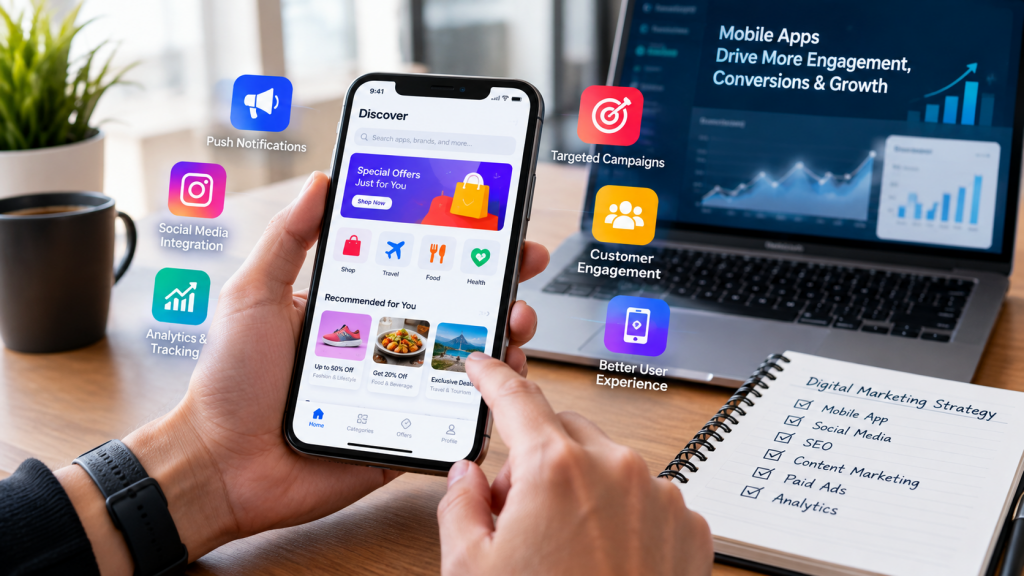
A marketing team spends months perfecting email campaigns, only to watch open rates keep slipping quarter after quarter. Meanwhile, the same customers are checking their phones dozens of times a day, engaging constantly with the handful of apps that have earned a permanent spot on their home screen. That gap hasn’t gone unnoticed, and it’s exactly why marketing leaders across nearly every industry are now working with a skilled Mobile App Development company, recognizing that an owned app has become one of the few remaining channels where a business can reach customers directly, consistently, and without fighting an algorithm for visibility.
Digital marketing has always chased attention wherever it happens to concentrate, and right now, a huge share of that attention lives inside mobile apps. Businesses building marketing strategies without accounting for this shift are increasingly missing the channel where their most engaged customers actually spend their time.
Why Apps Have Become a Marketing Channel, Not Just a Product
For a long time, mobile apps were treated purely as a product or service delivery mechanism a way to let customers place orders, book services, or access content. Marketing happened elsewhere, through ads, email, and social media that eventually funneled customers toward the app as an endpoint.
That relationship has flipped. Apps themselves have become active marketing channels, capable of driving engagement, retention, and revenue in ways that outside channels increasingly struggle to match. An app installed on a customer’s phone represents a level of access and permission that email and social media can’t easily replicate no algorithm deciding whether a message gets seen, no inbox competing for attention against hundreds of other senders.
How Apps Are Functioning as Marketing Tools in Their Own Right
1. Push Notifications as a Direct Line to Customers
Unlike email, which often goes unread for hours or gets filtered into a promotions folder, push notifications reach users almost instantly and get noticed. Used thoughtfully, they’ve become one of the most effective tools for driving immediate action flash sales, cart reminders, personalized offers without competing against the noise of a crowded inbox.
2. In-App Personalization Driving Higher Conversion
Apps collect rich behavioral data what customers browse, what they buy, how often they return and this data allows for a level of personalization that generic marketing channels simply can’t match. Product recommendations, tailored offers, and customized content based on real behavior consistently outperform the kind of generic messaging still common in broader marketing campaigns.
3. Loyalty and Rewards Programs Built Directly Into the Experience
Loyalty programs embedded within an app remove the friction of separate cards, codes, or email-based tracking. Customers can check points, redeem rewards, and see personalized offers in real time, which significantly increases how often they actually engage with the loyalty program compared to older, disconnected systems.
4. Retention Through Habitual Engagement
A well-designed app gives customers reasons to return regularly, not just when they’re ready to make a purchase. Content features, community elements, and genuinely useful ongoing functionality keep the brand present in a customer’s daily routine, building the kind of habitual engagement that traditional advertising struggles to create on its own.
5. Data That Sharpens the Rest of the Marketing Strategy
Beyond driving engagement directly, the behavioral data apps generate feeds back into broader marketing efforts, helping businesses refine targeting, messaging, and campaign timing across every other channel based on real customer behavior rather than assumptions or broad demographic guesses.
6. A Channel That Isn’t Subject to Algorithm Changes
Social media platforms constantly adjust their algorithms, often reducing organic reach for businesses overnight without warning. An owned app doesn’t carry this risk in the same way a business communicating directly with its own app users isn’t at the mercy of a third-party platform deciding how much visibility that communication actually gets.
Why This Shift Matters for Marketing Strategy Overall
Marketing teams that treat their app as simply a product delivery tool, separate from broader marketing strategy, are increasingly leaving significant value on the table. The businesses getting the most out of mobile today are the ones integrating their app fully into the marketing function using it for direct communication, personalized offers, retention campaigns, and as a genuine data source that informs decisions across every other channel.
This requires a shift in how apps get resourced and prioritized internally. Rather than treating app development as a one-time technical project handed off to IT, businesses increasingly need marketing and product teams working together continuously, refining the app experience based on what actually drives engagement and revenue.
Building a Strategy That Actually Works
Simply having an app installed doesn’t guarantee marketing results. Effective Marketing Strategies for Mobile Apps typically combine several elements working together thoughtful onboarding that demonstrates value quickly, personalized push notification campaigns that feel relevant rather than intrusive, loyalty mechanics that reward continued engagement, and regular content or feature updates that give users ongoing reasons to keep the app rather than deleting it after initial use. Businesses that treat these elements as an integrated strategy, rather than isolated tactics, tend to see meaningfully stronger retention and revenue results.
Common Mistakes That Undermine App-Based Marketing
A few patterns show up repeatedly in businesses that don’t get strong results from their app marketing efforts. Overusing push notifications tends to backfire, training users to ignore or disable them entirely rather than engage. Treating the app as a static product rather than something to continuously improve based on user behavior leads to stagnant engagement over time. And failing to integrate app data with broader marketing systems leaves valuable insight isolated instead of informing the rest of the business’s marketing decisions.
Where This Trend Is Headed
As competition for attention across traditional digital channels keeps intensifying, expect apps to play an even larger role in how businesses build direct, lasting relationships with customers. AI-driven personalization within apps will likely deepen further, and the line between “app” and “marketing channel” will likely continue blurring until the distinction barely matters at all.
Final Thoughts
Mobile apps have quietly evolved from a product delivery mechanism into one of the most valuable direct marketing channels available to businesses today. Companies that recognize this shift and invest in their app as a genuine marketing asset not just a functional tool are building deeper, more resilient customer relationships than those still relying primarily on channels increasingly crowded, algorithm-dependent, and harder to control.


More Stories
How to Choose the Best SEO Company in Singapore for Your Business
How Transparent VAT Pricing Can Improve Shopify Store Conversions
How Health Brands Can Use Visual Search to Reach More Consumers