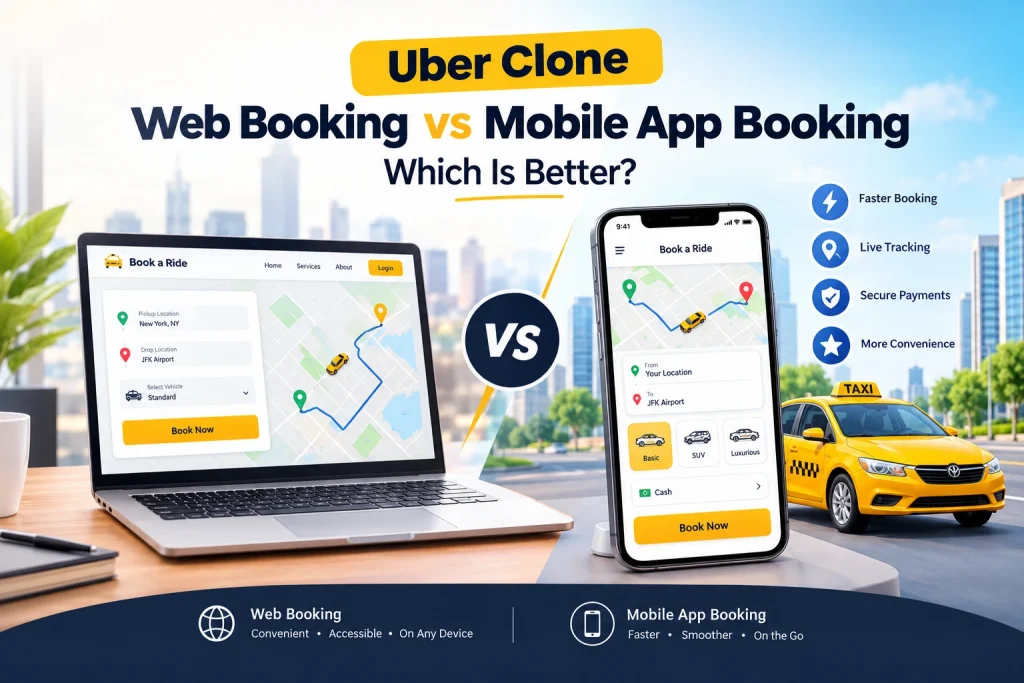
One of the first decisions to make when starting a ride-hailing business is to work out how customers are going to book their rides whether they use a website or download a mobile app? By understanding the differences between web booking and mobile app booking, entrepreneurs can decide on the best approach in view of their target audience, budget, and business objectives.
Both methods enable passengers to book rides, but there are differences in terms of the user experience and the business requirements. With a website bookings can be made using a browser, whereas a mobile application provides a dedicated experience including features like push notifications, saved locations, and interactions carried out within the app.
For both startups and existing taxi companies the choice is not always between the two options. The appropriate method will depend on how customers find the service, how often they book trips, and how the business intends to grow.
What Is Uber Clone Web Booking?
Uber Clone Web Booking is for passengers who want to book taxis by using a website or a booking interface that works through a browser, even if they do not choose to install a mobile application. According to the website’s capabilities, customers can input their pickup and drop-off locations, see the different ride options available and then request a taxi via their browser.
An Uber-type website is very useful for customers who wish to book a ride quickly or who want to use the service from a desktop computer, and businesses can distribute the booking link via search engines, social media, email, or through advertisements.
For instance, if a customer requires an airport transfer they might go to the taxi company’s website, input their travel information and arrange a ride without having to download any software. The convenience offered in this way can enable businesses to attract first-time customers who aren’t ready to install another app.
What Is Uber Clone Mobile App Booking?
Uber Clone Mobile App lets passengers book rides using an application on their smartphones. Uber Clone Mobile App can give features such as real‑time driver tracking, saved addresses, trip history push notifications and builtin payments depending on the plan.
An Uber Clone Mobile App is very helpful, for businesses that want commuters and customers who book rides often. After installation Uber Clone Mobile App gives users a spot to ask for rides, handle bookings and see their account details.
For operators, Uber Clone Mobile App can also help keep customers with notifications, loyalty offers and personalized experiences. However, customers must first discover, download, and install the application before using it.
Uber Clone Web Booking vs Mobile App Booking: Key Differences
Both booking methods can support a taxi business, but they differ in accessibility, customer engagement, and technical requirements. Comparing the two helps entrepreneurs identify which option fits their business model and available resources.
The most suitable option depends on the intended customer journey. Businesses seeking broad online accessibility may favour web booking, while those prioritising repeat usage may benefit from a dedicated mobile app.
Advantages of Uber Clone Web Booking
Web booking helps businesses make their taxi service accessible through a link making it a useful option for attracting customers who prefer not to install an application. It can also support visibility and provide a convenient booking channel for occasional passengers.
1. Easy Access for New Customers
2. Better Website Visibility
3. Convenient Desktop Booking
4. An Additional Booking Channel
Advantages of Uber Clone Mobile App Booking
A mobile app creates an environment for ride booking and can make frequent interactions more convenient. For businesses with a repeat-customer base it can support engagement, personalised features and smoother access to commonly used functions.
1. Faster Repeat Bookings
2. Real-Time Ride Updates
3. Better Customer Engagement
4. Access to Smartphone Capabilities
Which Option Is More Cost-Effective?
The cost depends on the features, technology, integrations and maintenance requirements than whether the booking interface is web-based or mobile-based alone. A basic booking website may require initial investment than separate native apps but a feature-rich website can also become complex and expensive.
An Uber Clone Web App may be a starting point for businesses testing demand in a new market. A mobile app may offer value when frequent bookings, notifications and customer retention are central to the business strategy.
Entrepreneurs should compare the cost of development hosting, third-party services, maintenance and future upgrades. They should also consider the cost of acquiring customers through each channel of choosing solely on the initial development price.
Can a Business Offer Both Web and Mobile Booking?
Yes. Businesses can provide website booking alongside an app to serve different customer preferences and increase access to their services. A combined approach can allow new customers to book through a browser while encouraging riders to use the dedicated application.
For example an entrepreneur could use a website to attract customers searching for airport taxis and offer an app, for commuters who book rides every week. Both channels should connect to a backend so that bookings, driver availability, fare calculations and trip information remain synchronised.
This approach requires planning as the website and app must work reliably with the same operational system. When implemented well it allows businesses to expand their booking options without managing processes.
Conclusion
Choosing between web and mobile booking shapes how customers find, use and come back to your taxi service. An Uber Like App can offer an experience for regular users while web booking makes it simpler for new users to use your service without needing to install anything.
The right technology partner can help you look at both choices pick the features and create a platform that fits your business needs. Work with a Taxi App Development Company to check out a good solution look at custom options and plan a booking system that grows with your goals.
Frequently Asked Questions
Q1. Is Uber Clone Web Booking better than app booking for startups?
Web booking can be a first step for startups that want to check how the market reacts with access through a browser. A mobile app might be better when regular bookings, messages and keeping customers are important.
Q2. Can customers book a taxi without downloading an Uber Clone App?
Yes. If the company has a working web booking system customers can ask for a ride through a web browser without installing the app. The features available depend on how the website’s built.
Q3. Can a Taxi Booking Web App and mobile app use the driver network?
Yes. Both ways of booking can connect to the system letting them use the same driver availability, booking history, pricing rules and trip details. Good connection is important to prevent problems and make sure information is the same.
Q4. Which option is easier to keep up: a web app or a mobile app?
A website can be changed in one place without users needing to download an update although checking for browser issues and testing is still needed. Mobile apps need testing for each platform. Updates, but how hard they are to keep up with depends on the tools and features used.
Q5. Should a taxi business start with a website and a mobile app at the time?
Not always as businesses should think about their money the people they want to reach and what they need first. Starting with one option and adding later can work, while starting with both might be right, for companies that need to reach many people from the beginning.



More Stories
Improve Digital Marketing with Odoo Dashboard Features and Reports
SEO Wilmington: A Practical Guide for Local Business Owners
The Growing Importance of Backend Optimization in Websites