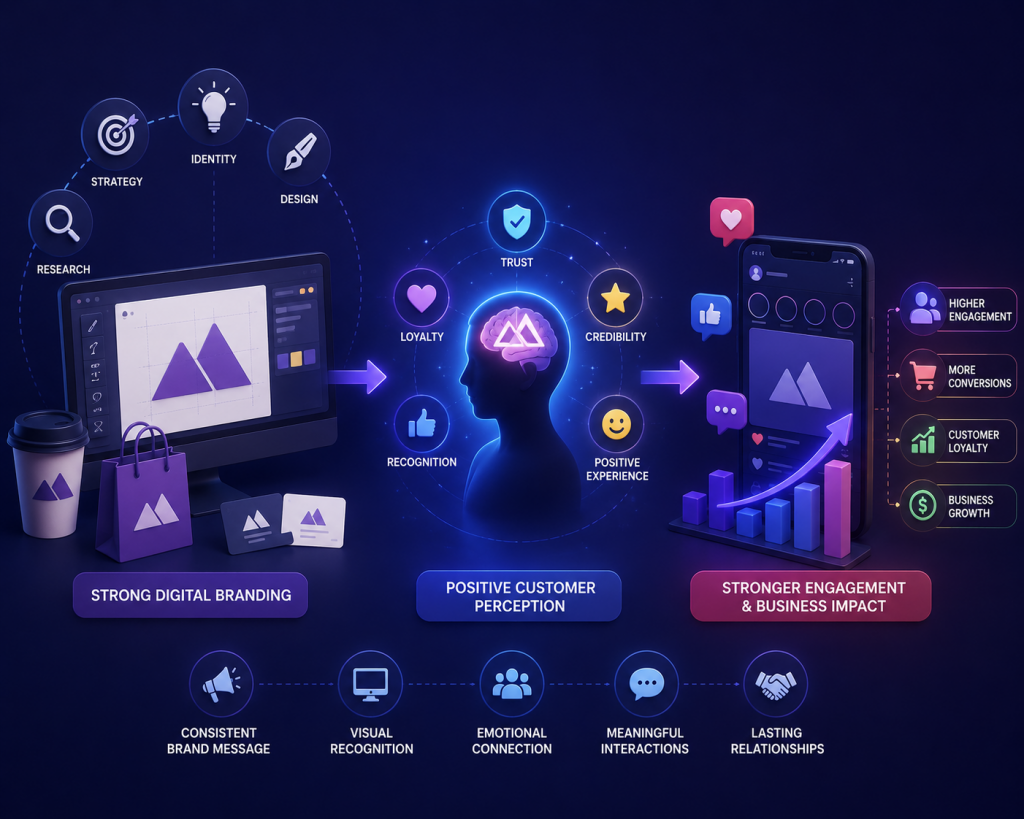
In today’s digital-first world, customers often encounter a brand online before they ever interact with it in person. Whether it is through websites and social media profiles, or online reviews and digital ads, each of the touchpoints helps to shape the perception of a business. The digital presence of a company is not any longer a continuation of a brand but in many cases the main channel through which customers develop opinions, trust and determine whether to interact or not. This is the reason why it is necessary to comprehend the Digital Branding Impacts Customer perception and engagement so that it can be a crucial aspect of both the small and big businesses. An effective digital brand develops a strong reputation, conveys value, and assists organizations to be distinguished by the highly competitive market.
The advent of digital technologies has revolutionized consumer behavior. Shoppers have developed demands to experience consistency, personalization, and interactivity in a variety of Internet sites. Companies that invest in strategic branding endeavors are in a better position to capture attention as well as develop significant relationships with their target audiences. A lot of companies prefer to collaborate with an expert branding agency in Saudi Arabia to enhance their presence in the internet and develop a harmonious brand experience. Knowing the effects of Digital Branding on Customer decision-making, businesses will be able to build a better relationship with their customers, boost loyalty, and foster long-lasting interactions.
Understanding Digital Branding
Digital branding is a process that entails creating and marketing a brand name or image online. It encompasses multiple components like web design, social media, content marketing, emailing, graphic branding, communication with customers and internet advertising.
In contrast to the old branding, the digital branding enables the businesses to interact with the customers directly and in real time. Each communication is part of the perception of the customer towards the brand and it affects the decisions to purchase. The effective digital brand can be used to build trust, increase recognition, and develop positive experiences that promote engagement in organizations.
The Importance of First Impressions
The customers tend to make a judgment on a brand within seconds of visiting its social media page or site. The use of a good-looking and professionally prepared online presence immediately gives out the message of credibility and professionalism.
Factors that lead to good first impressions are:
- Modern website design
- Consistent visual identity
- Clear messaging
- User-friendly navigation
- High-quality content
When all these factors are properly intertwined, customers will be more likely to remain interested and seek what the business has to offer.
Building Trust through Digital Branding
The aspect of trust is vital in customer perception. Consumers like brands that are seen as trustworthy, open, and genuine. Digital branding can aid in building trust because it produces a consistent experience throughout the customer touchpoints.
The brands can gain trust by:
- Sharing valuable information
- Maintaining consistent messaging
- Giving the correct product information.
- Quickly addressing customer questions.
- Showing proficiency in their business.
One of the most influential aspects of the purchasing behavior and customer loyalty in the long term are trust.
How Digital Branding Strengthens Brand Recognition
Brand recognition is the ability of customers to recognize and recall a company. Familiarity is enhanced by consistent branding across websites and social media platforms, email campaigns, and advertisements.
The use of logos, colors, typography and messaging must be consistent to produce a recognizable identity. Good recognition will make the customers feel more at ease with a brand since familiarity usually gives confidence to the customer.
This is yet another instance of the Digital Branding Impacts Customer as it affects the way the customer perceives and recalls a company.
Creating Emotional Connections
Modern consumers usually tend to select those brands that meet their values and beliefs. Digital branding gives business chances to convey their mission, purpose, and personality.
The use of storytelling is especially helpful in the establishment of emotional bonds. Authentic stories, experiences of success with customers and meaningful content are some of the brands that can be more likely to resonate with any audience.
Emotional ties will help customers to:
- Engage with content
- Subscribe to social media.
- Write a recommendation to others.
- Become repeat customers
Such relationships generate the long-term value to the businesses and consumers.
The Role of Social Media in Customer Engagement
Digital branding has become an indispensable tool of social media platforms. They give the companies a chance to communicate with their customers face to face, give updates and create communities around their brands.
A successful social media branding assists companies:
- Increase visibility
- Encourage conversations
- Gather customer feedback
- Build stronger relationships
- Showcase brand personality
Regular communication will help companies build trust and enhance the level of engagement with their audiences.
Content Marketing and Brand Authority
Content marketing is an effective element of online branding. Case studies, informative blogs, videos, and infographics can assist businesses in gaining authority in their industries.
Customers like brands which give information of use and not concentrating on the sales messages only. Educational material also presents skill and makes the businesses reliable sources.
This clearly illustrates how Digital Branding Impacts Customer confidence and purchasing decisions. When a company is perceived as an expert by customers, the company is likely to make its products and services credible.
Consistency Across Digital Channels
One of the most crucial principles of successful branding is consistency. The customers tend to make contact with the business via a variety of channels such as websites, social media, email campaigns, online advertisements, etc.
Consistency in branding means that the customers will feel and hear the same message and experience no matter where they come across the brand.
Some advantages of a uniform branding are:
- Improved recognition
- Greater trust
- Enhanced professionalism
- Stronger customer loyalty
- Better customer experiences
Cohesive brand identity will assist in the development of a smooth experience that will stimulate further interaction.
Online Reviews and Reputation Management
Reviews on the Internet play an important role in customer perception. Most customers do a review and testimonials of a company to assess its reputation before purchasing its product.
The positive reviews help to build trust and credibility, whereas the negative ones lead to the possibility of displaying the professionalism and responsiveness.
The businesses are advised to handle their online reputation actively by:
- Monitoring customer feedback
- Responding to reviews
- Addressing concerns promptly
- Promoting content clients to tell about the experiences.
Proper reputation management will help to build better customer relations and a more favorable brand image.
Personalization and Customer Experience
The modern customers demand customized experiences. Digital branding allows the businesses to customize content, recommendations, and communications to match customer preferences and behaviors.
Personalization can include:
- Customized email campaigns
- Targeted advertisements
- Personalized product recommendations
- Relevant content suggestions
Such experiences make the customers feel appreciated and comprehended, resulting in an increased engagement rate and brand loyalty.
Mobile Optimization and Brand Perception
As mobile devices make up a large percentage of online traffic, companies should make sure that their online branding activities are mobile phone and tablet friendly.
An experience that is mobile friendly enhances:
- Accessibility
- User satisfaction
- Engagement rates
- Conversion opportunities
Consumers will be more inclined to trust and interact with brands that offer to deliver smooth experiences across all devices.
Measuring Branding Success
Companies ought to consistently review the efficacy of their online branding exercises with quantitative performance metrics.
Common metrics include:
- Website traffic
- Social media engagement
- Customer retention rates
- Conversion rates
- Brand mentions
- Customer satisfaction scores
Tracking such metrics will assist companies to perfect their branding approaches and enhance customer interaction as time goes by.
Conclusion
Digital branding has emerged as a key consideration in the perception of customers, and the motivation of engagement as their consumer behaviour is ever-evolving. Companies with robust branding strategies do not leave unforgettable experiences that lead to trust, recognition and loyalty. Regardless of web design and content marketing, through social media interactions and reputation management, all online interactions add to customer perception of a brand. Knowing the implications of Digital Branding on Customer experiences will enable companies to make sound decisions that will enhance relationships and ensure long-term growth.
Considering the growing competitive market environment, organizations should concentrate on developing regular, customer-oriented online experiences. An effective branding strategy brings about awareness and also promotes a meaningful participation and a long-term loyalty. Understanding the effects of Digital Branding on Customer perception in all aspects of the buyer journey, businesses are capable of creating more meaningful relationships, boosting their reputation, and setting themselves up to be successful in the digital era.




More Stories
The Growing Importance of Backend Optimization in Websites
Mobile Apps Become a Growing Part of Modern Digital Marketing Strategies
How to Choose the Best SEO Company in Singapore for Your Business