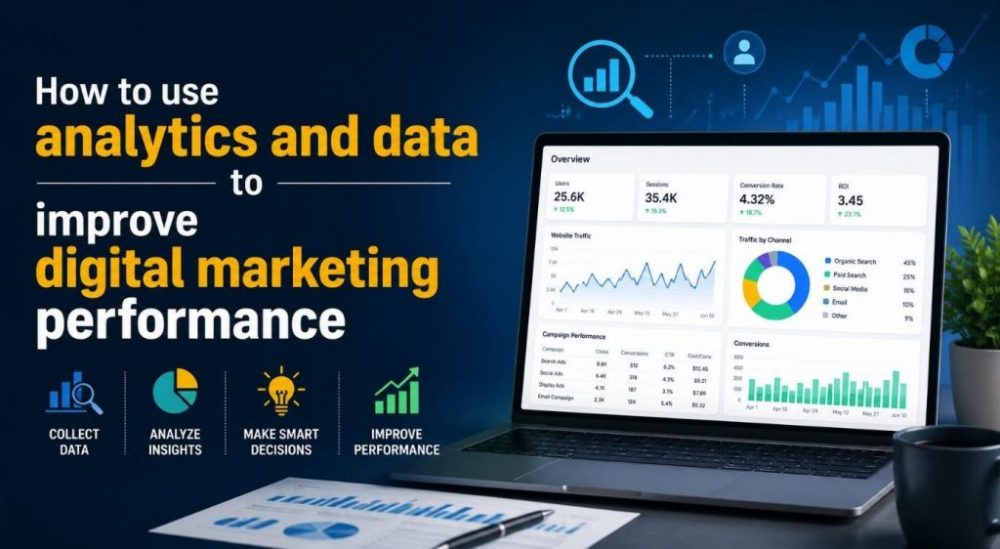
Introduction to Data-Driven Digital Marketing
Digital marketing has developed into a highly data-driven technique, where firms increasingly use analytics, automation, and generative AI to base their decisions. Data-driven digital marketing is defined as the collection, analysis, and utilization of customer and campaign data for enhanced performance of marketing techniques. With the use of analytics, organizations can have knowledge about customers’ behaviour, preferences, and buying patterns, thus allowing them to come up with more successful marketing campaigns. Additionally, the use of accurate data by firms allows them to minimize risks and maximize the efforts made in developing marketing campaigns.
Businesses can be able to detect trends in the market through the use of data. Through the use of analytics, modern firms are able to monitor interactions between customers and their websites, social media pages, as well as advertisements. Moreover, analytics help in enhancing customer satisfaction since it allows firms to develop personalized experiences. It is worth noting that businesses that adopt the use of analytics in the current competitive environment enjoy an enormous advantage.
Tracking Key Metrics and Customer Behaviour
It is important to track some key metrics in order to assess the results of digital marketing campaigns and the customer interactions with the online platform used. Some of the metrics tracked include website traffic, number of pages viewed, bounce rate, and session time. Moreover, it is also important to keep track of conversion rates since they show the percentage of visitors who took an expected action (such as purchasing a product, submitting a form, or signing up for newsletters). Some demographic information can be also gathered by using analytics (including age, location, device used, interests, etc.). Additionally, the metrics of a social media campaign include the numbers of likes, shares, comments made, and click-through rates. Also, it is possible to analyse customer behaviour patterns, showing how users move from the initial interaction with a business to making a purchase.
Using Analytics Tools to Optimize Campaign Performance
Analytics software has proven to be an indispensable tool for enhancing the effectiveness of digital marketing campaigns by enabling real-time analysis of performance. There are tools like Google Analytics and Meta Business Suite that help firms monitor their website traffic and performance of their advertisements. This enables them to track performance indicators such as traffic sources, campaign performance, click-through rate, and ROI. Moreover, the use of analytics will also help companies determine which marketing channels have been most effective in generating leads or conversions. In addition, it will help marketers conduct A/B tests by comparing various aspects such as two different ads, emails, and websites for improved performances. Using dashboards and automated reporting features will facilitate decision-making processes for companies. Finally, analytics tools will enable companies to identify underperforming tactics and optimize them for better results.
Improving Marketing Strategies Through Data Insights
Insight from data is used by firms to make improvements continually when using digital marketing tactics through better decision-making processes. Using data analytics will allow businesses to analyse customer preferences and create content relevant to different audiences’ needs. With personalized marketing, customers will be engaged since users are most likely to engage with relevant ads and suggestions. Data can also be used to improve SEO strategy where the best keywords and current trends are known to marketers. Moreover, firms can target customers effectively since demographic information, buying behaviours, and online activities can be analysed using data analytics. Furthermore, predictive data analytics will enable businesses to predict trends in the market and customer demands using data analysis from previous times. Data insights also help businesses to improve customer retention through improved user experience and relationship management.
Conclusion
Data analytics and insights have emerged as crucial elements to enhancing the success of digital marketing strategies in current times. Businesses collect customer information and analyse data to gain knowledge of their behaviour patterns, track vital metrics related to their campaign performance, and make data-driven decisions regarding the same. Platforms like Google Analytics and Meta Business Suite help in measuring campaigns’ success, learning about the best strategies that work well, and optimizing those areas of underperformance. In addition, with the help of data insights, businesses are able to offer customers personalized experiences and build stronger relationships with them.



More Stories
Improve Digital Marketing with Odoo Dashboard Features and Reports
SEO Wilmington: A Practical Guide for Local Business Owners
The Growing Importance of Backend Optimization in Websites