What is Digital Marketing?
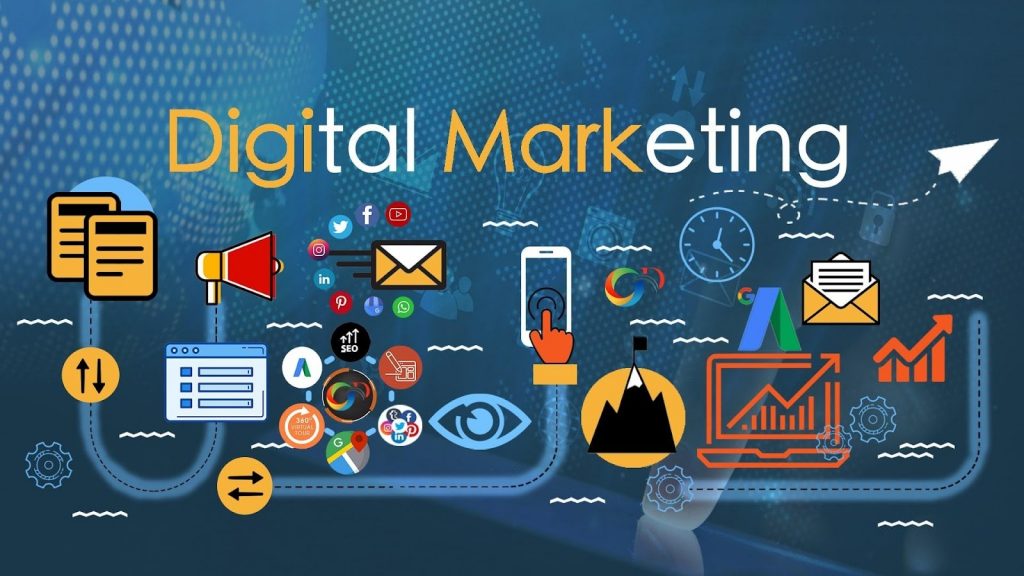
Digital marketing is the implementation of online channels to promote products, services, or brands. It uses digital technologies and data analytics to achieve marketing goals, including growing customers, increasing brand awareness, and boosting sales. Basically, digital marketing features a variety of channels.
These include a company’s presence on the internet, social media, email communication, display advertising, and influencer promotion.
The interaction process between these channels comprises the creative strategy and the data-driven optimisation to produce the measurable results. The objective of digital marketing is not only to bring in visitors but also to make them loyal customers. To further know about it, one can visit Digital Marketing Online Training in India. For e-commerce businesses, this means the growth of website sessions, the improvement of conversion rates, and the lowering of customer acquisition costs (CAC).
Types of Digital Marketing Used in E-commerce
Each online marketing source has its own special role that supports the e-commerce lifecycle. Here is a list of the main ways used:
- Search Engine Optimisation (SEO): SEO is a technique that leads to an e-commerce site ranking higher on search engines like Google by showing the most relevant content. By the use of product descriptions, meta tags, and site structure, businesses can generate traffic that is free of charge. Besides that, technical SEO is concerned with parts such as site speed, schema markup, and mobile-friendliness.
- Pay-Per-Click (PPC) Advertising: A PPC campaign on Google Ads or Meta Ads is a sure and quick method for product pages to get new visitors. To lure the correct customers, e-commerce companies are generally inclined to use Google Shopping Ads, where the product with pictures, prices, and ratings is displayed directly in the search results.
- Social Media Marketing: Instagram, Facebook, and YouTube are three of the many channels businesses use to promote their brand and expand their customer base. Besides paid campaigns and influencer partnerships, e-commerce brands can reach targeted niche audiences creatively, quickly, and efficiently.
- Email and Automation: With tools such as Mailchimp and Klaviyo, email marketing is more individualised and automated through different user-engaging scenarios, e.g., cart abandonment reminders or product recommendations, thus resulting in increased user engagement.
- Content Marketing: When the brand uses blogs, videos, or buying guides, not only does it become more authoritative, but it also gets a better ranking in the search engines. Apart from that, content also acts as a customer developer through education before the buying process.
- Affiliate and Influencer Marketing: These tactics combine to brand the company message by cooperating with those who get paid for each item sold that they bring. It is an easily expandable channel that goes hand in hand with e-commerce businesses, having the target of rapid growth without any limit.
What Are the Benefits of Digital Marketing for E-commerce?
Well-known IT hubs, such as Gurgaon and Noida, are the places where you can find very well-paid jobs for skilled professionals. So, a Digital Marketing Course in Gurgaon can be a great way for you to start your career in the digital marketing field. The use of digital marketing in e-commerce has led to advantages that are not only measurable but also scalable for businesses.
- More conversions: Personalised experiences and remarketing reactivating purchase intention.
- Data-Driven Insights: Businesses have the opportunity to analyse the performance and make campaign adjustments straight away.
- Lower costs: Digital ads are often a great performer compared to traditional advertising in terms of ROI.
- Brand loyalty: Retention tactics such as loyalty programs and social interactions enhance the value for the long term.
Conclusion
The introduction of e-commerce and digital marketing to each other brought about a revolutionary change in how businesses work today. One can say that they are the two sides of a coin. Though the former might be considered as a platform that caters for transactions and logistics, it is digital marketing that makes the shop visible, competitive, and profitable. There is a huge demand for E-commerce professionals in cities like Noida and Bangalore. One can find many institutes providing Digital Marketing Course in Noida. In the present-day digital economy, a combination of SEO, paid ads, social media, email automation, and analytics integration is what every online retailer thrives on. Therefore, digital marketing is not only a part of e-commerce; it is the lifeblood that drives its growth, visibility, and sustainability over time.


More Stories
SEO Wilmington: A Practical Guide for Local Business Owners
The Growing Importance of Backend Optimization in Websites
Mobile Apps Become a Growing Part of Modern Digital Marketing Strategies