Introduction
Keywords and backlinks are no longer the only things that matter for search engine optimization. User experience (UX) and performance metrics are very important for figuring out how well websites rank these days. Loading speed, interactivity, and visual stability are now very important for Google’s Core Web Vitals. It gets harder to optimize these things by hand as websites get more complicated.
This is where AI is changing how people do SEO these days. AI lets you make decisions based on data, optimize for the future, and improve performance in real time, all of which have a direct effect on UX signals. AI tools are becoming necessary for keeping search visibility competitive, whether it’s by speeding up pages or making engagement metrics better. A top-rated AI SEO agency has made a lot of tools that give us a lot of information. This shows how advanced technologies are changing how we optimize.
Why AI is Important for Core Web Vitals and UX(User Experience)
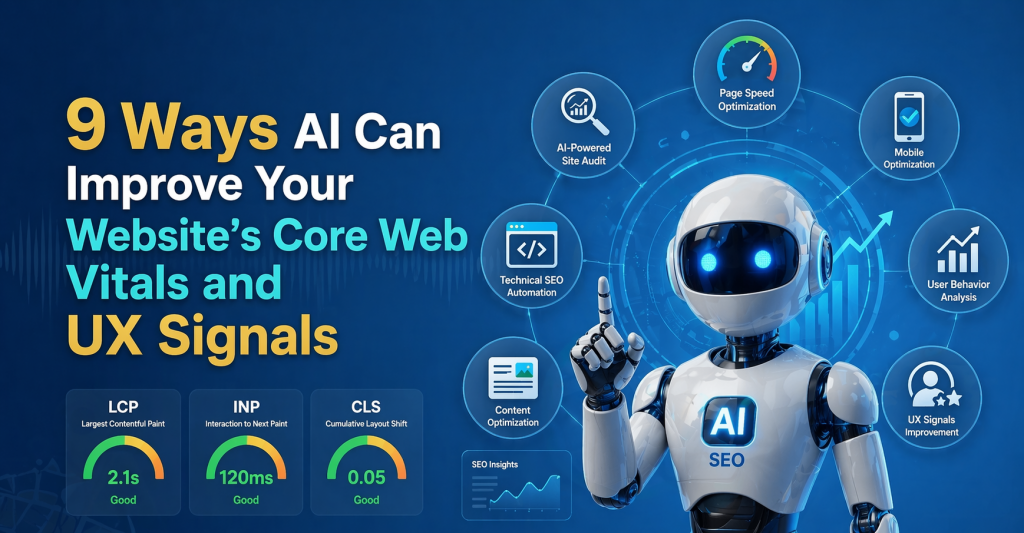
There are mainly 3 metrics of Core Web Vitals: Largest Contentful Paint (LCP), Interaction to Next Paint (INP), and Cumulative Layout Shift (CLS) this are three metrics. These numbers have a direct effect on how website speed affect by them and how people use a website. When a site doesn’t work well, people leave it more often and will go to second website this is called bounce rate, when this bounce rate of a website is high then google drop its ranking its rankings go down.
AI helps by looking at huge database, finding patterns, and making changes that would be hard to do by manually. AI adds better results and the ability to handle large tasks to SEO workflows, so you don’t have to guess and check. This is especially true for things like technical SEO, mobile optimization, and behavioral analysis.
For instance, an top-rated AI SEO agency might use machine learning models to find performance problems on thousands of pages, which is something that traditional tools have a hard time doing well.
9 Ways AI Can Make Core Web Vitals and UX Signals Better
1. Smart Image Optimization
One of the many reasons pages take so long to load is because they have big, unoptimized images which make page speed high. AI tools can automatically compress images, pick the right formats (like WebP), and even change images size based on the type of device.
This makes Largest Contentful Paint better right away by making sure that important visual elements load quickly. AI-powered SEO services often use automated image handling to keep things the same on big websites.
2. Improvements to Page Speed That Are Predictable
Before changes are made to a website, AI can tell how they will affect loading speed. It looks at past data and how users interact with the site to suggest changes that speed things up without changing the design.
This ability to predict helps cut down on unnecessary scripts, speed up server response times, and make code delivery easier—all of which are important for improving Core Web Vitals.
3. Code optimization that happens automatically
A lot of modern websites have big JavaScript and CSS files that make them run slower. AI tools can check and improve code by getting rid of unused parts, putting off scripts that aren’t important, and making sure that code runs at the right time.
A lot of new SEO automation services focus on cutting down on code bloat, which speeds up loading times and improves interactivity metrics.
4. UX monitoring in real time
AI-powered analytics tools keep an eye on how users behave in real time, finding problems like slow interactions, broken elements, or layout changes that weren’t expected.
This lets website owners quickly fix problems that affect how users feel about the site. An AI-based SEO company might use heatmaps and behavioral data to make layouts better and boost engagement metrics.
5. Better Content Delivery with CDNs
AI makes Content Delivery Networks (CDNs) work better, which is important for how well a website works for user. AI algorithms figure out the best places for servers, improve caching strategies, and guess when traffic will be high with this sites become better.
A cutting-edge AI search marketing company could use these tools to make sure that content is delivered faster around the world, which would lower latency and make the user experience better in all areas.
6. Customized Experiences for Users
AI changes what you see on a page based on your location, your preferences, and your behavior. Personalized user experiences make people more interested, lower bounce rates, and make people stay on your site longer. These are all important UX signals for SEO which can we improve by AI.
AI-based website ranking services often use behavioral data to change the layout of content, make suggestions, and change the paths people take to get around the site in real time.
7. Improving the stability of the layout
When things move unexpectedly while a page is loading, that’s called Cumulative Layout Shift. AI can look at how a layout works and suggest changes, like making room for ads and images before they load.
AI-powered SEO tools help keep the look of a website stable by finding things that make it move and suggesting changes to the structure.
8. Improving Voice and Interaction
AI helps make websites easier for people to use as voice search and interactive interfaces become more popular. Better UX signals come from faster response times, conversational interfaces, and easy-to-use navigation.
Smart SEO automation services can look at how people interact with your site to make navigation easier and faster, which will directly affect your INP scores.
9. A/B testing that runs on its own to make UX better
A/B testing can be done by AI which make websites try out different designs, layouts, and content all the time. AI tools looks at many situations at once and finds the best options, instead of having to test them by manually. This method could help an artificial intelligence search optimization agency improve UX elements that affect engagement and conversions without having to any kind of issue’s.
How AI is becoming more important in technical SEO
AI is changing technical SEO in more ways than just Core Web Vitals. It helps organize structured data more effectively, making better use of your crawl budget, and planning how to link to other pages on your site.
For example, the best AI SEO services often use machine learning to find problems that are hidden and affect performance and rankings. These tools give you useful information that works with search engine algorithms while still putting the user experience first.
AI also helps with optimizing long-tail keywords like “how to improve Core Web Vitals for mobile websites” or “AI tools for faster page speed optimization.” AI makes sure that content meets user expectations while keeping strong performance metrics by better understanding what people are looking for when they search.
In conclusion
AI is no longer just a new trend in SEO, it is now a most important way to make websites work better and make users experience better. AI offers better ways to improve Core Web Vitals and UX signals, such as optimizing images and code and allowing for real-time monitoring and personalization. As search engines keep putting user-centric metrics first, using AI in SEO strategies is a more efficient and data-driven way to do things. Websites can stay competitive in a digital world that is getting more and more complicated by being able to predict problems, automate fixes, and change to how users behave.




More Stories
Improve Digital Marketing with Odoo Dashboard Features and Reports
SEO Wilmington: A Practical Guide for Local Business Owners
The Growing Importance of Backend Optimization in Websites