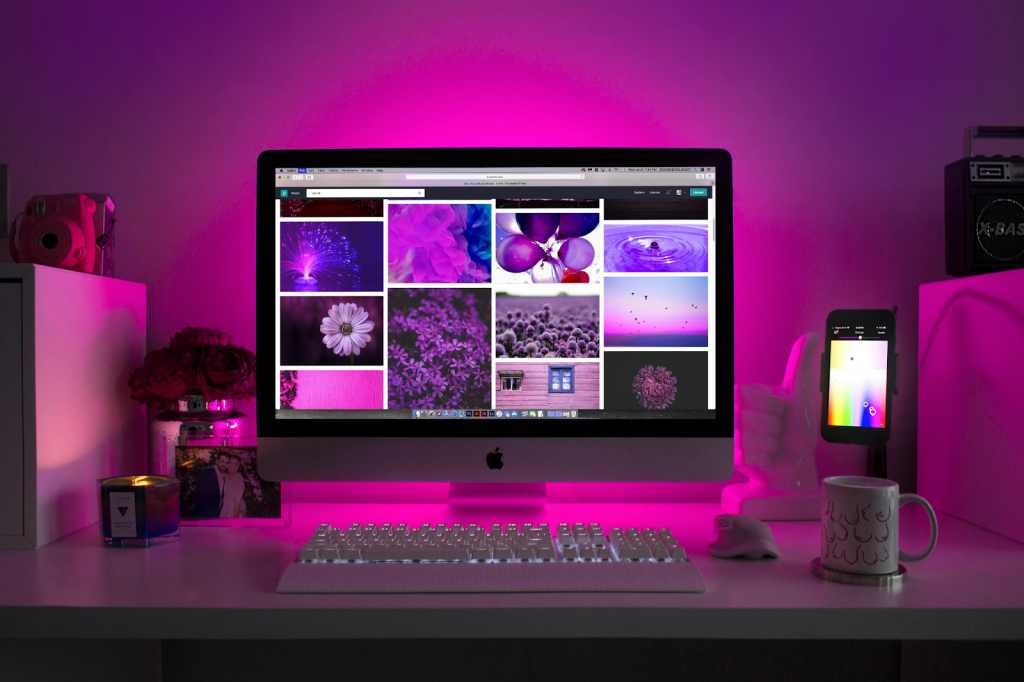
As a design movement, maximalism has seen a sharp rise in popularity in recent years, all across popular culture. Its bombastic presence has been felt in interior design, in music, through artists like Chappell Roan and Polyphia, and in cinemas, in films like Everything Everywhere All at Once and the Spider-Verse movies.
When it comes to web design, users have spent the past 30 years in stasis; well-accustomed to minimalist design sensibilities, shaped by iconic sites like Apple and Google, which mastered the minimalist formula and laid the groundwork for the overwhelming majority of sites that have cropped up since.
But now… We’re bored. Minimalist sites have their place, sure. They can offer a clear user experience and improve technical performance – but they’re everywhere. Society is finally growing wise to this, too, so I know it isn’t just me going crazy. At last, dull, homogenised, monochrome sites aren’t the only gig in town. Something bigger and bolder has arrived.
What is Maximalism?
If minimalism is all about a delicate, ‘less is more’ approach, then maximalism, quite simply, is ‘more is more’, followed by a slap in the face, just for good measure.
The maximalism movement is characterised by its abundance. Abundance of colours; abundance of textures; abundance of graphical elements, and, in the case of web design, an abundance of features and animations.
Maximalist designs aren’t just loud; no, they are downright explosive. Yet, there is a sense of control amongst the chaos. A delicate balance between these numerous elements that creates a sense of harmony.
Principles of Maximalist Web Design
Bold, Vivid Colours
Maximalist websites are easy to identify because of the sheer range of colours on display. Highly saturated, with a focus on high contrast, these colours are chosen to be as dynamic as possible.
Visual Noise
Maximalist sites use a ton of visual elements. Pages are filled top-to-bottom with images, graphic designs, complex patterns and textures that blast into the users’ eyes, all while adding more visual depth and complexity to each page. In the name of dynamism, these designs are positioned to have maximum impact and are often asymmetrically placed, subverting our expectations.
Typography
Maximalist web design makes good use of unconventional, heterogeneous fonts to be as expressive as possible.
Complex Hierarchy
Maximalist websites tend to have a complicated hierarchy, driven by their subversive design elements. Though they may seem chaotic, once the user tunes into their wavelengths, they’ll find that there is method to the madness.
Examples of Maximalist Web Design
BGN
BGN’s website is the epitome of organised chaos. The web developers in Manchester use a wide variety of eclectic fonts, a contrasting colour palette, and dazzling designs to put their portfolio front and centre.
Choreus
The commercial art agency’s blindingly bright website bombards users with colour (specifically yellow), contracted against bold, black fonts, and a chaotically rich collection of artwork that revolves across the homepage. As you click through the website, you’ll find that each artist is represented by their own designs, with each varying in size.
Benefits of Maximalist Web Design
Increased Engagement
Bold visuals capture users’ attention and keep them exploring the site and engaged, potentially leading to higher conversion rates and indirect boosts to SEO, as bounce rates are lower.
Strong, Memorable Branding
The brand’s personality is more distinct because it can express itself in more vivid ways, creating a strong, lasting impression. This is particularly beneficial to e-commerce websites, as even if users don’t make a purchase on their first visit, they’re more likely to
Information Density
Unlike minimalist websites, maximalist sites don’t have their hands tied when it comes to how much information they can display on a given page. They have greater license to exposit a huge amount of information and features in a way that stimulates users who want to explore and learn more.
Rounding Off
Maximalism in web design embraces abundance in every possible way. They offer designers a truly blank canvas to create something different, that is visually extravagant, messy, and balanced, all at once.
Maximalist websites have become increasingly popular over the past couple of years, and, hopefully, they are here to stay. Not just to break up the minimalist monotony that we’re all bored with at this point, but to continue to evolve the medium into new, unexplored territories.


More Stories
How Compliance and Digital Marketing Work Together in Fintech Growth
How Strategic SEO Helps Businesses Grow in the UAE
How Website Translation Helps with Local SEO?