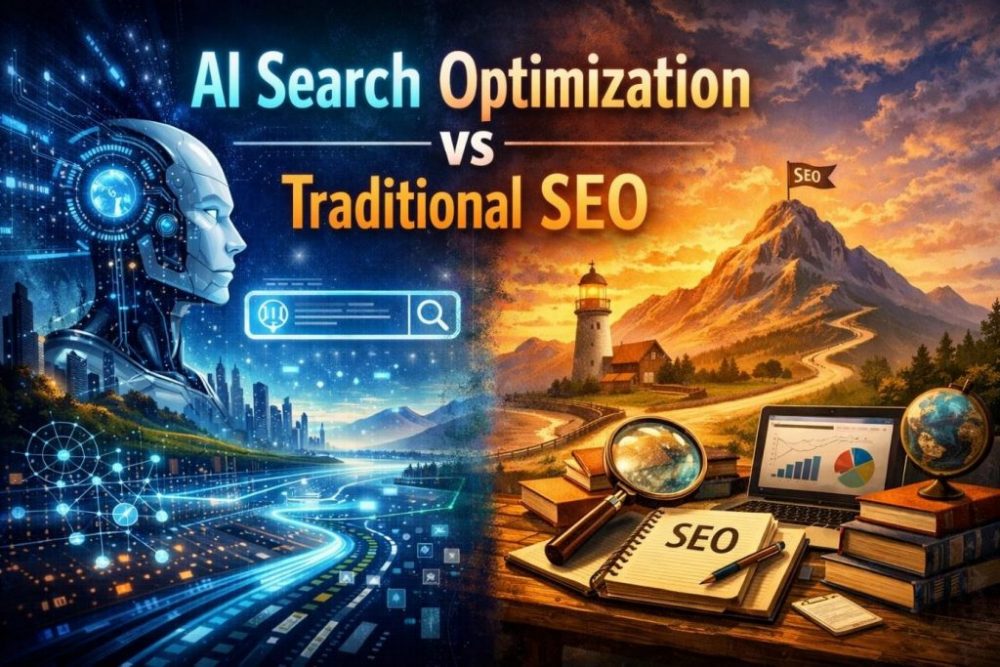
The development of search engines shows the changing face of information retrieval. Early search engines used extensive keyword indexing, where information visibility was contingent upon whether keywords matched queries. The process moved on to develop semantic searches, allowing the engines to understand what the user meant when using the query rather than just match the keywords. Modern search engines are increasingly becoming dominated by AI engines powered by machine learning and NLP (Natural Language Processing) to offer more context-sensitive results.
Today, the algorithms are constantly changing depending on how users interact with search engine interfaces. As such, the outputs of searches are improved according to click streams, engagement time, and query reformulations. The ability of algorithms to change has enabled search engines to use AI technologies such as generating search outputs directly and even using voice-based search assistants.
As a result, expectations have changed considerably for users. Personalization is a key factor in the relevance of any search, where people are expecting searches that are fast, intuitive, and driven by intent based on the particular circumstances, physical location, and personal preferences of each individual.
Traditional SEO: Core Principles and Strategies
The traditional SEO practice is performed using a systematic method that aims at making web pages optimized in terms of visibility based on relevant keywords, performance, and authority indicators. This is due to the basic element of optimization, conducting proper keyword research with regard to the integration of short-tailed, frequent keywords and long-tailed, intentioned keywords.
On the other hand, on-page SEO is conducted using content quality by means of relevance, clarity, and logic, alongside other factors like proper usage of metadata, alt text and other on-page factors, whereas off-page SEO concentrates on the process of link building, with an added emphasis on quality and relevance of links.
Moreover, technical SEO involves ensuring that a website is efficient by looking at the speed of the website, mobile friendliness, the ability for search engines to access pages through crawling and indexing. Additionally, content-related SEO involves making sure that there are blog posts and landing pages optimized around certain keywords.
AI Search Optimization: How AI is Transforming Search Behaviour and Rankings
AI search optimization is the revolution in how search engines analyse, rank, and display content for the users. With the use of AI and machine learning the algorithm continuously learns through clicks, user behaviour, engagement, and other factors. The development of NLP technology is also a critical factor as it analyse the user’s search request and prioritizing their intent over keyword match.
With the introduction of generative AI, the process of ranking in the SERPs has been changed drastically, as AI generated summaries and direct answers have led to more zero-click searches, while at the same time personalization became an important aspect with the ability to provide users with personalized content depending on their location, search behaviour, and even predictions of what the user may want.
In line with this shift, the process of content optimization has shifted from keyword to topical optimization using structured data, schema markup, and entity optimization. The key elements in this regard are clarity, conciseness, and authoritativeness of the content.
Key Differences: AI Search Optimization vs Traditional SEO
The difference between traditional SEO and AI-based SEO can be seen in their approach to search engine visibility and engagement with users. While the former revolves around keywords, optimizing different web pages in order to make them appear on top for some certain search query, the latter considers user intent and context in favor of developing topical authority.
Additionally, there are changes in the output formats in search results. Whereas traditional SEO aims at securing the ranking in the form of blue links on search engine results page, the AI-driven optimization process takes advantage of direct answers, summaries, and conversational outputs produced by AI-powered software.
The system for measurement has changed from ranking and click through rate to engagement metrics, such as dwell time and utility of the information provided. Although the conventional SEO strategy adapts to changes in algorithms, AI SEO works on an adaptive system that continuously learns.
Finally, the ranking factors further accentuate the difference between the two approaches. SEO involves backlinks, keyword analysis, and site functionality whereas the AI-driven approach makes use of behavioural factors, content quality, and context analysis. In this regard, the evolution in the technique of optimization is seen from the use of keywords to intent mapping.
Conclusion
To summarize, a change in focus from traditional search engine optimization to an AI-led search engine optimization strategy signifies a paradigm shift in digital visibility tactics. Although traditional techniques are still valid, their success becomes ever more challenging in a world that is powered by intent, context, and actions of its users. AI-based searches require a much more comprehensive approach, which revolves around quality, relevance, and authority. Companies that align themselves with these new trends will have better chances for visibility and success in the contemporary search environment.




More Stories
What Makes a Gojek Clone App Different from Other Multi-Service Apps?
How to Choose the Best SEO Company in USA for Your Business
Uber Clone Web Booking vs Mobile App Booking: Which Is Better?