
Paid advertising has become easier to run, yet harder to make profitable. Reach is no longer the challenge – return is. Without a structured system behind it, paid media creates activity but not sustainable growth. This is where Performance Marketing shifts the outcome. By linking every campaign to measurable business results, it transforms advertising spend into a predictable source of customer acquisition and revenue.
This approach is not about being present everywhere. It is about being present where revenue is created – and proving it with numbers.
In this blog, we outline how a structured performance-led approach turns paid media into a measurable and profitable growth channel.
What Performance Marketing Really Means?
Performance marketing services is a results-focused advertising model where spending is tied directly to actions that grow the business – leads, sales, or qualified opportunities. Every campaign is designed to justify its cost by what it produces.
Instead of asking, “Did people see our ads?”
The better question becomes: “Did this investment move revenue forward?”
This shift creates clarity across channels, teams, and budgets.
Why Traditional Paid Media Fails to Deliver Profit?
Many paid campaigns fail not because platforms do not work, but because execution lacks discipline. Common issues include:
- Campaigns launched without clear revenue benchmarks.
- Creatives optimized for clicks, not customers.
- Platforms run in silos without unified measurement.
Without structure, paid media becomes a cost center rather than a growth engine.
The Core of High-Performing Paid Growth
A strong paid acquisition system is built on a few essential pillars.
1. Intent-Driven Traffic
Not all traffic is equal. Ads should be placed where demand already exists. Search, social, and display must be mapped to user intent not just reach.
2. Conversion-Ready Experiences
Sending users to generic landing pages wastes opportunity. Conversion optimization guarantees that when traffic arrives, it is directed towards a specific goal via design, message, and flow.
3. Continuous Learning Loops
Every click, scroll, and submission provides feedback. Intelligent systems evaluate this information in real-time and improve bids, creatives, and targeting.
How Performance Marketing Creates Predictable Growth?
When sponsored media is viewed as a performance system rather than a promotional tool, it begins to yield consistent outcomes. At this point, having a well-defined performance marketing strategy is crucial. It connects:
- Audience insights
- Channel selection
- Creative execution
- Funnel design
- Revenue tracking
Together, these elements create a framework where growth can be planned, not guessed.
Turning Clicks into Customers
High-performing paid media does not stop at generating traffic. It is designed to move people through a buying journey. This is how performance marketing converts interest into revenue:
- Ads attract users with real purchase or inquiry intent
- Landing pages reflect the exact promise made in the ad
- Forms, calls, or checkout paths remove friction
- Retargeting re-engages those who did not convert
Each step compounds the value of the media spends.
Why Measurement Is the Real Competitive Advantage?
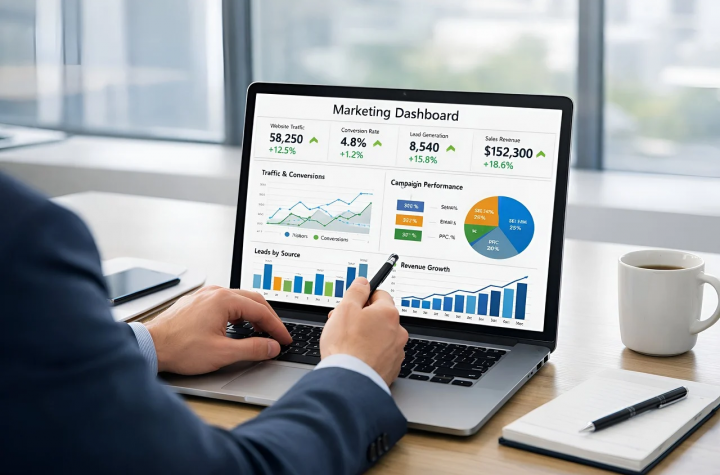
Most companies know how much they spend on ads. Few know how much they truly earn from them. With proper attribution and tracking, paid campaigns can deliver truerevenue acceleration by showing:
- Which ads generate profitable customers?
- Which channels produce long-term value?
- Which audiences convert at the lowest cost?
This visibility makes it possible to scale what works and cut what does not quickly.
Where Platforms Like Search and Paid Social Fit?
Search platforms remain powerful because they capture demand at the moment of intent. This is where tools such as Google Ads services play a vital role when aligned to outcomes rather than impressions.
Paid social, on the other hand, creates demand by placing relevant offers in front of the right profiles, even before they actively search.
When orchestrated together through data-driven ad campaigns, these channels stop competing and start compounding.
What Makes Paid Media Truly ROI-Focused?
A profitable paid media engine is guided by numbers, not opinions. This is the essence of ROI-driven marketing.
It requires:
- Unified tracking across all platforms
- Revenue-based performance benchmarks
- Constant testing of creatives and offers
- Budget allocation based on return, not habit
Over time, this transform paid advertising into a predictable revenue system.
Why Strategy Matters More Than Spend?
Budgets do not create success. Systems do.
A disciplined paid media strategy aligns platforms, audiences, creatives, and funnels around one goal: profitable growth.
When campaigns are structured around performance instead of exposure, paid media becomes one of the most controllable levers in the business.
Conclusion
Paid media should never feel like a gamble. When built on performance marketing, it becomes a transparent, scalable, and profitable growth channel. With the right structure, data, and optimization in place, every campaign moves from being an expense to becoming an asset – one that continuously compounds value with every iteration.

More Stories
Improve Digital Marketing with Odoo Dashboard Features and Reports
SEO Wilmington: A Practical Guide for Local Business Owners
The Growing Importance of Backend Optimization in Websites