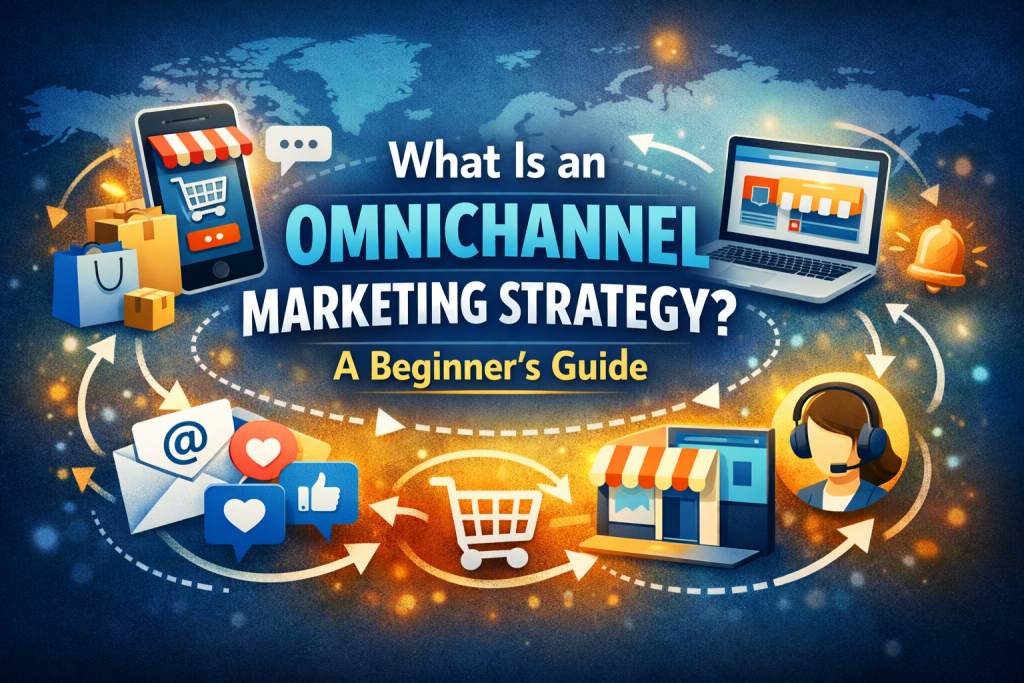
The 2025 customer doesn’t simply click on your item and make a purchase.
Instead, the journey has changed tremendously.
From emails, social media posts, browsing apps, to exploring websites, a customer now loves to interact with a brand everywhere!
And when 73% of buyers now make use of multiple channels during their buying journey, you know where things are going!
But how are brands responding to it? How do they make sure that a customer finds them consistently throughout all the channels?
This is where the execution of an omnichannel marketing strategy comes into play! A seamless approach that boosts customer engagement and leads to purchase decisions!
So what goes behind this strategy? How are brands successfully creating a unified experience? Keep reading to know more!
What Is Omni-channel Marketing Strategy
Omni-channel marketing focuses on delivering a consistent and cohesive experience to your customers, regardless of their location.
Think of it: a customer explores your physical store, and their interest sparks for a makeup palette you just launched.
But there is no purchase yet!
Next, you send them an email regarding the discount going on those products.
They feel interested, visit your website for more, and end up making a purchase.
This is how things connect in omnichannel marketing.
You are tracking the customer journey and reminding them continuously that your brand exists and has something great to offer.
For an effective omnichannel marketing strategy, a reputation marketing agency can help you maintain a consistent brand image across all digital touchpoints.
Understanding The Difference Between Omni-Channel vs. Multichannel Marketing
Many people confuse the two terms and often use them interchangeably. However, there is a significant difference between the two.
While the strategy for both involves using different platforms, the connection differed.
The main differences include:
| Omnichannel marketing | Multichannel marketing |
| Connects and integrates channels together | Is done through independent channels |
| Creates a unified customer experience | Experience is different on each channel |
| A data-driven approach is used | Focuses on limited data sharing |
| Uses a highly personalised approach | Personalisation is not mandatory |
| The goal is a seamless customer journey | The goal is to stay active on different platforms |
The Significance Of Omni-Channel Marketing
Omni-channel marketing matters because it delivers a consistent and highly personalised experience across all touch points. This approach ensures that customers not only feel marketed but truly valued!
According to stats, brands with omni-channel marketing retain 89% of the customers as compared to 33% for others.
Here is what brands with an omnichannel marketing strategy have experienced:
| Customer experience | Higher customer retention due to a unified experience |
| Strengthened relationships | Personalisation fosters a strong relationship with customers |
| Increased loyalty | Consistent positive interactions boost customer loyalty |
| Higher ROI | Frequent interactions convince customers to spend more |
| Competitive advantage | Let’s business stand out by offering a convenient experience |
Did you know that 76% of customers get easily frustrated when they don’t experience a personalised interaction? This is where omnichannel marketing removes the barrier of disconnections!
This strategy helps you meet those expectations customers have!
What Does An Omni-Channel Marketing Strategy Comprise?
Omni-channel marketing is built on certain core components. Let’s take a look at the key pillars of this strategy,
1. Unified Customer Data Platform
A successful omnichannel marketing strategy depends on data. A reliable customer data platform or centralised CRM helps businesses make informed decisions.
Here is how it helps
- Keeps a track of individual behaviours
- Analyses their store preferences and purchase history
- Synchronises data from email, website, and apps
Pro tip: For creating a unified brand experience, a social media management company in UAE can help you as well.
2. Consistent Brand Messaging
One wrong move, and your brand message could lose its impact!
This is why it is important to align all your messages and visuals with your brand identity. From email, ads, social media posts, to blogs, you need to maintain a unified brand voice across all channels.
This significantly contributes to building trust and reliability.
3. Hyper Personalised Experience
Personalisation was never about just adding the recipient’s name while sending them emails! It is about delivering the right message, offers, and recommendations to offer one-on-one experiences at the right time!
For instance,
- Sending a reminder for an abandoned cart
- Sending product suggestions based on the browsing history
- Sending exclusive discounts to your loyal customers
4. Multichannel Customer Support
Your customers should get support anywhere! You don’t need to leave them for a moment, surrounded by confusion and queries in their mind.
Omni-channel marketing strategy focuses on giving full access to your customer history and behaviour to the support agents.
This ensures consistency in problem-solving throughout each interaction.
5. Data-Driven Insights
The metrics you should monitor include,
- Customer lifetime value
- Engagement per touch point
- Conversion rates across each segment
- Drop-off points in the journey
How To Create An Omni-Channel Marketing Strategy
Remember the following key actions to get started or improve your omnichannel marketing strategy.
- Observe Your Customer Journey
You need to begin by mapping your customer journey. Observe their intentional transitions across the website, mobile apps, your store, and customer service.
Pro tip: Professionals offering Google My Business listing services in Dubai can bridge the gap between online searches and store visits.
- Unify Your Data Across All Channels
Align and coordinate all the data to make better decisions. Data includes,
- Email interactions
- Browsing behaviour
- Customer support history
- Loyalty program activity
- Segmenting Audience
Segmenting your audience based on how they are interacting with your business.
The main groups include,
- New visitors
- Repeat customers
- Cart abandoners
- High-value customers
- Personalized Experiences
Make sure to engage your customers with hyper-personalised experiences. You can leverage automation tools to,
- Offer product recommendations
- Send an SMS that triggers emotions
- Create engaging web content
- Create targeted ad campaigns
- Seamless Support
Your marketing and sales channels should reinforce your message continuously. Train your team to use omnichannel marketing tools effectively.
FAQS
- How is omnichannel marketing different from digital marketing?
Digital marketing focuses only on online channels such as websites, social media, and email. On the other hand, omnichannel marketing combines components of the virtual and physical worlds, such as mobile apps in physical stores, into a connected system.
- What are omnichannel touch points?
Omnichannel touch points are all the channels that allow a customer to interact with a brand through one, consistent journey. Examples include website visits, SMS notifications, physical stores, social media ads, and mobile apps.
- How long do the results for Omni-marketing take?
Results vary significantly from each business. However, with consistent efforts using customer data centralisation and personalisation, businesses see improvements within 3-6 months.
Wrapping Up
Omni-channel marketing is now a vital part of the marketing efforts and is setting new benchmarks for customer experience. With the right strategy, data integration, consistency, and continuous improvements, you can meet customers wherever they are, boost loyalty and engagement while driving revenue for your business!
More Stories
Why long-form content still dominates search rankings
How to write pillar content that ranks for years
Content refresh strategies that bring old posts back to life