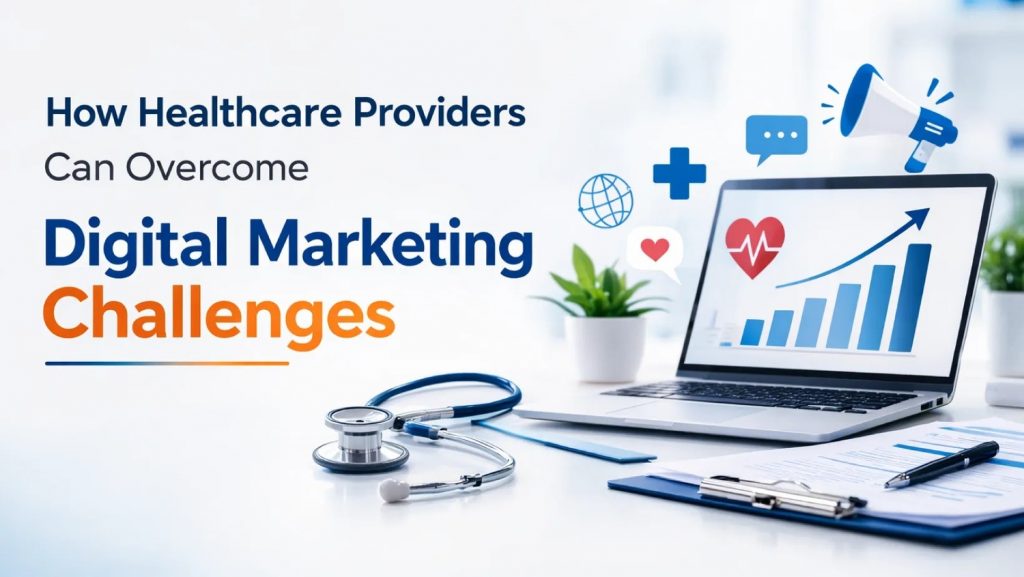
The healthcare landscape has shifted dramatically. In 2026, the journey to finding a doctor almost always begins on a screen. Patients are no longer just in search for a nearby clinic; but are actually seeking symptom-to-solution level answers on AI-driven platforms. Also, the well informed customers actually verify all doctor credentials through short-form videos. While this digital shift offers significant growth, it also presents unique hurdles. Unlike a clothing brand or a restaurant, a hospital cannot just post anything, and fool their patrons.
Healthcare providers today face a high-stakes balancing act. They must grow their patient base while keeping data locked down and maintaining a level of trust that often demands years to build, but just a few seconds to break. Understanding the specific digital marketing services required for this industry is the first step toward overcoming these obstacles.
The Trust Gap and Ethical Content
One of the biggest hurdles is building patient trust in an era of AI slop. With millions of AI-generated health articles appearing daily, patients are becoming skeptical. They don’t want generic advice; they want verified expertise.
Healthcare marketing must prioritize topical authority. This means having real clinicians review every blog post and video. If a patient feels a piece of content is just a sales pitch, they will leave. It is the need of the hour to opt for tailored and efficient social media services packages that focus on doctor-led videos and educational “what to expect” guides rather than flashy advertisements. Trust is the new currency, earned through transparency and medical accuracy.
The HIPAA and Privacy Tightrope
Regulatory compliance remains the most daunting challenge. As of early 2026, HIPAA regulations have become even stricter regarding third-party tracking. Many traditional marketing tools, such as standard tracking pixels, are now considered a risk if they capture Protected Health Information (PHI) without appropriate safeguards.
| Challenge | Impact on Marketing | Modern Solution |
|---|---|---|
| Tracking Pixels | Can leak patient health interests to big tech. | Server-side tagging or “Privacy-First” analytics. |
| Contact Forms | Unsecured forms can expose sensitive data. | Fully encrypted, HIPAA-compliant intake systems. |
| Remarketing | “Creepy” ads can follow patients with sensitive issues. | Interest-based targeting without specific health IDs. |
Challenge Impact on Marketing Modern Solution
Tracking Pixels: Can leak patient health information to big tech, server-side tagging or “Privacy-First” analytics.
Contact Forms: Unsecured forms can expose sensitive data, fully encrypted, HIPAA-compliant intake systems.
Remarketing: Creepy ads can follow patients with sensitive issues interest-based targeting without specific health IDs.
However, with the right technical setup, such as signing Business Associate Agreements (BAAs) with all vendors, you can still reach the right patients safely.
Limited Budgets vs. Rising Ad Costs
Many private practices and mid-sized clinics operate on thin margins. They consider marketing as a luxury rather than a necessity. Meanwhile, the cost of Google Ads in the healthcare sector has continued to rise, with some keywords costing over $5 per click.
When the budgets are tight, then every dollar needs to work harder. This is why many providers are moving away from broad “brand awareness” and toward “intent-based” marketing. Instead of targeting everyone in a city, they use PPC services to target specific symptoms or local search terms, such as “emergency dentist near me.” This ensures that the budget is spent on patients who are ready to book an appointment right now.
The Complexity of the Patient Journey
The path from “I have a pain” to “I am sitting in a waiting room” is not a straight line. In 2026, a patient might:
- Search for a symptom on a phone.
- Read an AI-generated summary (AI Overview) on Google.
- Watch a video of a surgeon on Instagram.
- Check online reviews on a local Map Pack.
- Finally, use an online booking link.
If any of these steps are broken, the patient is lost. A common mistake is spending heavily on ads but having a website that is hard to navigate on a phone. Managing this omni-channel experience requires a mix of technical SEO, reputation management, and high-quality social media services packages.
Conclusion
Digital marketing for healthcare is no longer just about being found, but is more about being trusted. Though the challenges of HIPAA compliance, rising costs, and content saturation are quite real, these are not insurmountable. By making the shift from promotional messaging to patient-centered education, providers can build a sustainable digital presence that drives growth.
Success in this field requires a technical touch and a human heart. Moreover, it is about carefully ensuring that when a patient is in their moment of need, your practice is there with a clear, safe, and helpful answer.
If you are someone who is in genuine search for expert guidance, joining hands with proven digital can help navigate complex regulations while reaching the patients who need you most.

More Stories
How to Choose the Best SEO Company in Arizona?
The Rise of AI Discovery: Why Personal Branding Is Becoming the New SEO
How the SEO Funnel Works: From Search Traffic to Real Conversions