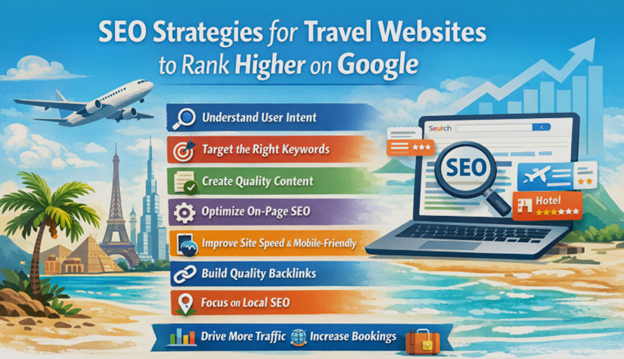
The travel business is very competitive and just a site will not help in attracting traffic. Travel sites must have a good SEO (Search Engine Optimization) to be ranked higher in the Google search results in order to be unique. Properly executed, SEO will ensure a steady flow of traffic, enhance recognition and boost the number of bookings without having to use paid ads exclusively.
The guide will outline some of the useful and practical search engine optimization techniques that travel websites can implement to have a better ranking and access the right audience.
Understand User Intent First
Knowledge of what is being searched by the travelers needs to be understood before it comes to working on keywords or content. There are users who search destination guides whereas others are interested in flight offers, hotel comparisons or visa advice.
To illustrate, a person who enters the query of cheap flights to Dubai is not intending to do the same thing as a person who enters the query of the best places to visit in Dubai. The content must correspond to the purpose of the search by the user.
Many travellers search Google to find offers on a reliable travel deals platform like HolidayBreakz. It is indicative of the importance of producing content that would directly relate to what users are seeking, deals, trust and transparent information.
Focus on the Right Keywords
The basis of SEO is Keyword research. The travel websites are supposed to aim at a combination of:
- Short tail keywords: such as cheap flights, holiday packages.
- Long-tail key words: such as the best time to visit Bali on a budget.
Long-tail keywords tend to be less competitive and offer more targeted traffic. This is because one does not have to use a keyword repeatedly, however it is important to use the keyword in a natural manner in headings, subheadings and the body. The location based keywords should also be included because a lot of travel searches are city or country specific.
Create Helpful and Clear Content
Content contributes significantly in ranking high on Google. Travel websites must aim at developing easily adequate and useful content.
Examples include:
- Destination guides
- Travel tips and itineraries
- Airline policies and changes.
- Budget travel advice
Do not use too promotional wording. Instead give actual value and respond to user queries. The content should be written well, this will ensure that your site will remain longer in the eyes of the user, a good indicator to search engines.
Optimize On-Page SEO Elements
On-page SEO assists the search engines to know more about what is on your content. Major aspects to consider would be:
Title tags and meta descriptions
Use specific and pertinent titles with your key word. Be brief but to the point.
Headings (H1, H2, H3)
Organize your material with headings. This enhances legibility and search engines.
URL structure
Use simple and keyword based URLs
Image optimization
Name files appropriately and provide alternative text on pictures to facilitate understanding of the search engines.
Improve Website Speed and Mobile Experience
The majority of the travelers book and search their phones. A low speed or badly designed website may result in high bounces.
To improve performance:
- Ensure that your site is fast loading.
- Use a mobile friendly design
- Do not use heavy images and redundant scripts.
Google has made page speed and mobile usability among its ranking factors and hence this is a mandatory step.
Use Internal Linking Smartly
Internal linking will make users explore your site and at the same time, it will enhance search engine optimization. As an illustration, when you have a blog discussing the best time of the year to visit Europe, you can also affiliate it with site pages that sell flight promos or tourism packages. This keeps the users occupied and allows the search engines to know the outlay of your site.
Build High Quality Backlinks
The links of other sites to yours are referred to as backlinks. They are a symbol of reliability and authority.
To build backlinks:
- Guest blog on travel blogs.
- Cooperate with travel influencers.
- Post valuable information that people would wish to refer to.
Put emphasis on quality and not quantity. It is better to have few strong back links than a large number of weak ones.
Optimize for Local SEO
Travel websites are usually location oriented or city oriented. Local SEO makes you show up in the searches on those regions.
- Design geographical pages.
- Use Google Business Profile where possible.
- Include local keywords such as the names of cities.
This is particularly beneficial when the business is of the nature of tours, hotel bookings or even travel services in particular places.
Keep Content Updated
Travel details are always dynamic polls of airlines, visa regulations and cost variations may change. Frequently updating your content will make it current and will enhance your likelihood of ranking higher. New content is an indicator to Google that your site is operational and trustworthy.
Use Structured Data Markup
Structured data assists search gangs to comprehend what you have to convey to them and has the ability of enhancing the appearance of your pages in search results.
In the case of travel websites, this may be:
- Reviews and ratings
- Flight details
- Hotel information
This may result in rich results, which receive more clicks.
Track Performance and Improve
SEO is not a one time task. You will have to monitor your own performance and improve with time.
Use tools like:
- Google Analytics
- Google Search Console
Track the progress of the pages that are doing well or those that require improvement. Modify your text and words, according to statistics.
Conclusion
To be ranked high in Google, one should combine the appropriate strategies and hard work. User intent based travel websites that produce helpful content and maximize technical factors have higher chances of success.
Through suitable keywords, creating better websites, and winning their trust with quality content and back links, one can be able to bring more and more visitors and convert them. SEO is a time consuming process, though, using the appropriate strategy, it can be among the best methods to expand a travel website.


More Stories
Top Benefits of Digital Marketing for Business Growth
Why long-form content still dominates search rankings
How to write pillar content that ranks for years