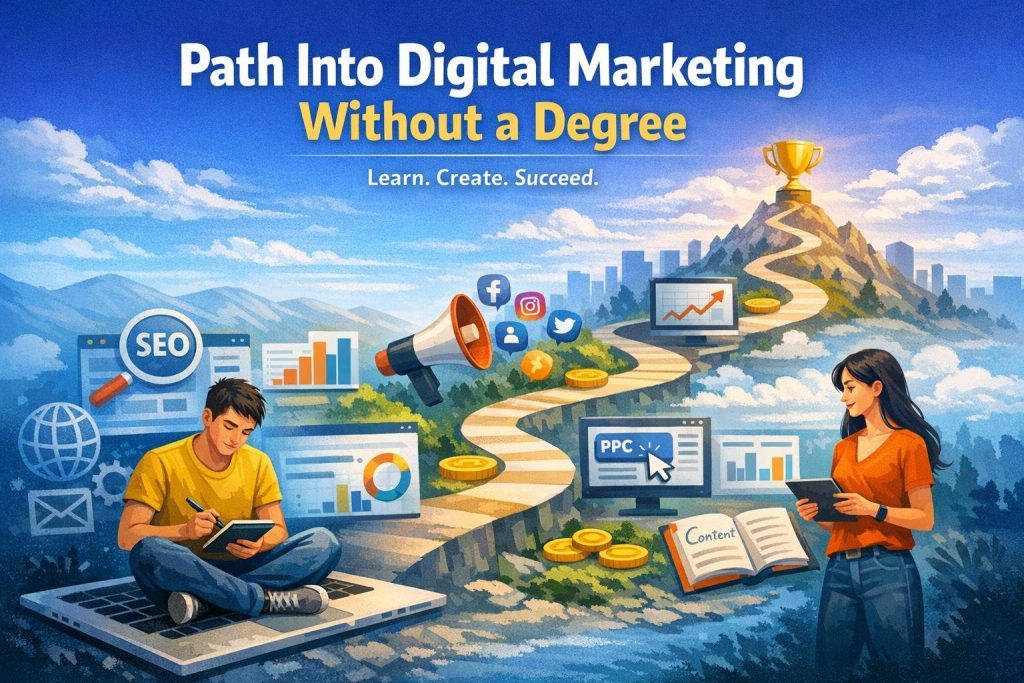
Digital marketing is one of the few modern careers where your skills, curiosity, and consistency matter far more than your formal education. Many successful marketers never followed a traditional academic path — they built their careers by learning, experimenting, and proving results. If you’re someone wondering whether you can enter this field without a degree, the honest answer is yes and not only is it possible, it’s becoming increasingly common.
Digital marketing rewards people who can adapt quickly, understand audiences, and use tools creatively. Businesses don’t hire marketers because of certificates alone; they hire them because they can generate visibility, engagement, and revenue. That means your journey can begin right now, wherever you are.
Why a Degree Isn’t Mandatory in Digital Marketing
There is a lot more focus on theory in traditional degrees, whereas digital marketing is changing virtually every month. What is most valuable in the eyes of any employer is experience.
And don’t worry if you don’t have a degree; in fact, that’s where you get a bit of an advantage, as you get to learn straight from the experience rather than listening to what some book has to say. When you run a campaign, manage social media, write a blog, or even optimize a site, remember, that’s like creating a portfolio, and that is far more meaningful than any form of accreditation.
Step 1: Understand the Core Areas of Digital Marketing
Before we dive in, let’s first get a sense of the broader landscape. As digital marketing is quite vast, understanding the major pillars will help you narrow your focus.
Core areas include:
• Search Engine Optimization (SEO)
Familiarize yourself with how websites rank, keyword research, on-page optimization, etc. Study reliable learning centers like Moz, Search Engine Journal, Google Search documentation, etc.
• Social Media Marketing
Understand audience behavior, platform trends, and content strategies. Read up on platform guides and best practices on analytics, which may be available from Meta’s and LinkedIn’s business resources.
• Content Marketing
Writing blogs, scripts, and other stories that boost engagement. In this regard, it is important to read good marketing publications.
• Paid Advertising
For Google Ads and social advertising, testing, budgeting, and analysis are necessary. Google’s learning system is a good reference for learning about campaign structure.
• Analytics & Strategy
Step 2: Learn by Doing — Not Just Watching
Tutorials are helpful, but digital marketing becomes real when you apply it. Start small and practical.
Hands-on ways to build skill:
• Create a simple blog or website and practice SEO
• Manage a social media page with a content plan
• Write sample marketing copy or campaigns
• Run small test ads with limited budgets
• Analyze performance and iterate
Step 3: Build a Visible Portfolio
Employers and clients want proof, not promises. A portfolio shows what you can do.
Your portfolio might include:
• SEO case studies or keyword strategies
• Content samples or blog articles
• Social media growth examples
• Campaign performance summaries
• Website optimization projects
Step 4: Learn Industry Tools Gradually
Tools don’t make you a marketer — but knowing them improves efficiency.
Start with essentials:
• SEO research platforms
• Analytics dashboards
• Content scheduling tools
• Website builders
• Keyword planning resources
Step 5: Stay Connected to the Industry
Digital marketing thrives on community learning.
Ways to stay updated:
• Follow reputable marketing blogs and communities
• Participate in webinars or online workshops
• Join marketer forums or social groups
• Analyze successful campaigns
Step 6: Start Freelancing or Interning Early
Experience compounds quickly when you work with real businesses.
You can begin by:
• Offering services to small businesses
• Helping friends or startups with online presence
• Taking freelance gigs
• Interning remotely
Real-World Mindset Matters More Than Credentials
As a digital marketing expert in Dubai, I’ve seen firsthand that persistence, experimentation, and adaptability outweigh formal education. What people care about are tangible deliverables, additional traffic, more engagement, and substantive conversions, not about credentials or titles.
Digital marketing is performance-based. If you prove the effectiveness of digital marketing campaigns, opportunities will arise.
Common Mistakes to Avoid
Entering the field without a degree is empowering, but watch out for the following:
• Moving around numerous skills without depth
• Consumption of tutorials without applying
• Expecting Instant Results
• Ignoring analytics and strategy
• Copying trends without understanding purpose. Growth results only from continuous experimentation and reflection.
Your Path Forward
What matters to clients are the results: traffic, engagement, and conversions, not academic credentials. Digital marketing is an accessible, creative, and dynamic field, and it requires no permission, a classroom, or a degree to get started—just dedication and interest. Start learning. Build projects. Analyse results. Improve. Repeat. Ultimately, your work is your qualification. And that’s what truly opens doors in this industry.

More Stories
How to Choose the Right SEO Consultant for Your Business in 2026
How to Optimize Amazon PPC Campaigns for Lower ACoS and Higher Sales
Create a Private Wholesale Store in WooCommerce