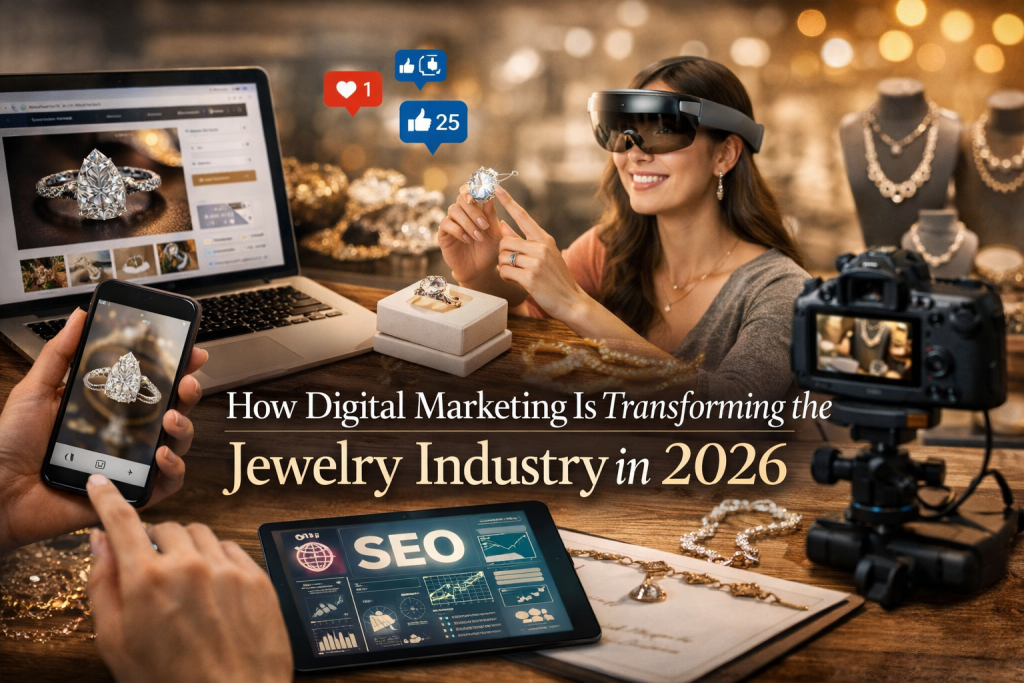
There is a strong digital transformation in the jewelry industry that is altering the way in which brands engage customers. What used to be very dependent on the physical retail outlets and face to face interactions are now relying on online discovery and interaction. In the modern world, the majority of buyers start their process on the websites of Google, Instagram, and YouTube, where they discover designs, compare them, and develop trust until they make a purchase.
This change is justified by the fact that the online jewelry market is developing at a rapid pace with the growth rate remaining high on a yearly basis. Consumers do not have to visit the stores to wait anymore, but conduct research, review, and make choices at their screens. From discovering a unique V Shaped Diamond Necklace to exploring a Pear shaped engagement ring lab created, the entire buying journey is now influenced by digital platforms. Online marketing is not a luxury anymore–it is the cornerstone of expansion of the jewelry brand in 2026.
The Digital Transition of Consumer Behavior
In the current society, jewelry consumers have a completely different approach to buying jewels than they did previously. They also research, compare designs and reviews then make up their mind. This has changed the purchasing procedure into being more responsible and educated. Jewelry is an emotional purchase and in many cases associated with the memory, relationships and personal milestones and therefore trust and authenticity is highly valued.
Simultaneously, the experience has become very visual and experience oriented as well. Customers desire to see what a piece will look like, the way it can be worn, and how it will fit in their lives. To authenticate their decisions, they use pictures, videos and actual client reviews. This trend has compelled the brands to pay more attention to digital storytelling and transparency to establish meaningful relationships with the audience.
SEO – The Jewelry Brand Visibility Backbone
The art of search engine optimization is now one of the most effective solutions to jewel brands that wish to expand in a digital-first market. Nowadays, when a customer wants to be inspired or find a particular product, the brands displayed at the top of the list have a serious edge in terms of visibility and credibility. SEO is no longer the process of simply adding words to the text. It has to do with knowing what the user really wants to find out and providing useful and relevant information that meets the needs of the user in a natural manner.
High-intent searches like diamond ring or gold necklace are a very clear indication that the buyer has already taken interest and is getting closer to making a purchase. This causes it to be significant that brands match their content with the purpose of the user and still remain genuine and clear. The Internet, as an example, when one is looking at a Pear shaped engagement ring lab created , they would want to see in-depth advice, design knowledge, and informative content and not a list of products. Expertise, authority, and trust have become central to Google, and it is contributing to the increase in value, which requires brands to constantly produce valuable content, which should create credibility over time
Influencer Marketing and Social Media Advertising Demand
The social media has emerged as one of the most powerful media in the jewelry industry. Instagram and Pinterest also enable the users to explore new styles, trends, and brands through visual materials. Jewelry is a very visual product and therefore this kind of exposure helps the product a lot.
Digital marketing has received a new dimension of trust by influencers. It is more relatable and real when viewers are shown veritable individuals styling and putting on jewelry. This instils a feeling of trust on the product and promotes buying choices. Especially the short-form videos, reels and user generated content can be strong tools in demonstrating how jewelry can fit in our life.
The Personalization and AI is transforming the Buying Experience
Artificial intelligence is increasingly taking part in determining the way customers shop jewelry. The use of AI-based recommendations assists customers in finding the appropriate products that suit their tastes, which makes the process more interactive and personal. This does not just enhance customer satisfaction but it also raises the prospect of conversion.
Virtual assistants and chatbots are also improving customer interaction by offering a real-time support and guidance. Moreover, such apps as augmented reality enable users to virtually try jewelry, which helps them see how an item would look like before purchasing it. Customized shopping experiences are emerging as a major driver to the contemporary jewelry sales.
Jewelry Branding and Content Marketing and Storytelling
The idea of content marketing has turned out to be a very strong means through which jewelry companies can get to know their audience better. Telling stories that are reflective of their values, inspiration and craftsmanship, brands are no longer just about the product alone. This will build an emotional bond that is not merely transactual.
The new generation customers seek sense in the things that they buy. They would like to know the way a piece is created, what it symbolizes, and how it compares with their values. Storytelling assists the brands in conveying this in a better way, making their jewelery more memorable and effective. The strategy builds trust as well as strengthens brand identity in a competitive market.
E-commerce Optimization and Conversion Strategies
Being online is not sufficient, but the brands should also pay attention to the development of an effective and enjoyable shopping experience. This process depends on the website design. Customers can use the site more easily to shop and buy products as it has a clean layout with an easy navigation system and mobile-friendly layout.
The description, the high quality images, and the price should be properly presented on product pages. Customer reviews and trust signals will add credibility and make buyers have confidence in their purchases. Rapid and fast checkout processes also improve customer experience and limit the likelihood of cart abandonment and improve general conversions.
Trends in Jewelry Industry that will influence Digital Strategy in 2026
A number of trends are changing the definition of the digital marketing strategies in the jewelry industry. Modern buyers have huge concerns about sustainability and good sourcing. Customers are seeking jewelry that aligns with their values and enables responsible practices.
Another significant trend is the customization when buyers prefer to get special items that fit their fashion and identity. Simultaneously, statement designs and expressive styles are becoming increasingly popular, in terms of individuality and creativity. These trends are defining the ways in which the brands are approaching marketing, design, and customer interactions in the digital arena.
Threats The Jewelry Brands encounter in digital marketing
Along with the opportunities, jewelry brands have challenges in digital marketing as well. Competition is rather high, and it is hard to catch the eye in search results and social media lines. It may also be difficult to build trust online where the customers are unable to touch or see the product physically.
Other factors of importance are pricing transparency and visual presentation. Value should be communicated clearly and a strong visual identity should be preserved in the brands. All these aspects are to be balanced with the help of a defined strategy and regular working to achieve success in the digital environment.
Future Prospective – What Jewelry Marketing Will Be
Jewelry marketing is strongly related to technological progress that defines the future of marketing. Search is becoming personalized and recommendation-oriented in place of the traditional key-word-based systems. This implies that the brands should be interested in the needs of the customers and not merely searching the particular words.
The buying experience will further be influenced by immersive technologies, including virtual reality and an increased level of personalization. Personal branding and a personal interaction with the customers will also gain significance. Jewelry brands will be forced to innovate fast in order to be relevant and competitive in the digital world.
Conclusion
The jewelry industry has been totally transformed in digital marketing to bring new opportunities and redefine the manner in which the brands engage their customers. The digital innovation has touched every part of the buying journey, whether it is through SEO and social media, AI and storytelling.
With the consumer behavior becoming a constantly changing phenomenon, the brands must invest in developing trust, providing value, and meaningful experiences. The industry is changing long-term as the transition to digital-first strategies remains here to stay. Luxury is a market that will be characterized by jewelry brands adopting digital innovation today.

More Stories
What Should You Know Before Choosing an Offshore SEO Partner in India?
Affordable Digital Marketing Agency for Small Business
Boost Your Online Success with SACS Creative Media Best SEO Company in Dubai