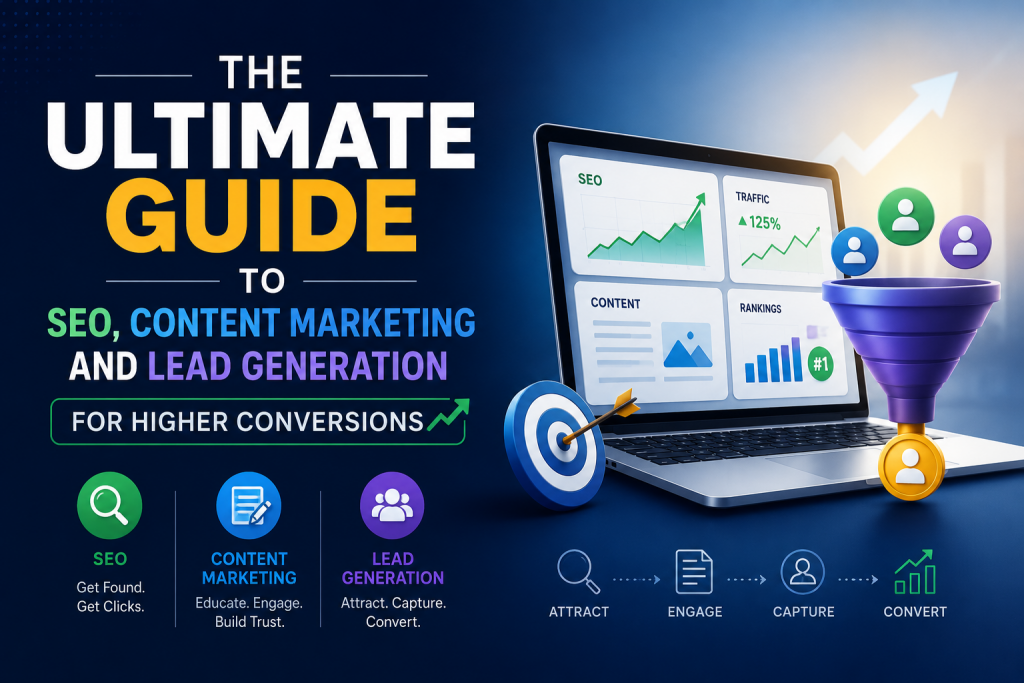
SEO, content marketing and lead generation are the holy trinity of business growth in the digitized world. However, there are multiple businesses that only use these disciplines individually, neglecting the wonderful synergies that can take place of other sellers whenever combined. This guide will show you how to combine these three pillars into an efficient, with a streamlined approach that will qualify leads and increase conversions by leaps and bounds.
Insights into the Strategic Connection.
So SEO isn’t something that’s different, content marketing isn’t separately, and lead generation is different, they’re all connected. Together they create a reciprocal relationship that provides visibility, builds trust and engagement, and creates leads that lead to real business opportunities. If properly aligned, both support each other in peaking the performance of the other.
Search is the first step in the journey. Having well-optimized content that gets organic traffic brings in people who are looking for a solution. However, if you are only able to see them, that isn’t a conversion. Compelling, informative and value-added material turns passive visitors to active prospects. To conclude, strategic lead generation tactics like forms, CTAs, email signups collect buying contact data from prospective buyers ready to engage.
Creating SEO Optimized Content Which is appealing to the right visitors.
To win at SEO you need to grasp the intent and motivation behind your visitors’ queries. Here are the multiple keyword research that isn’t about what keywords you can come up with that will see there are a lot of clicks; it’s about to finding out what are the specific problems issues that user have to solve for your ideal customers.
Use long-tail keywords that show buyers interest. Best email marketing platform for small teams represents a buyer in the midst of researching for a solution. If I want to get a quick look at a file’s SHA256 hash or generate a very tiny text only for designers, I will use a Superscript Generator or a Tiny Text Generator, respectively, and so on.
The website optimization and how it affects the website has a huge impact. Craft your H1 so they know right away the primary value that you are offering in your article. Break content down into digestible pieces that answer specific questions (techniques of H2s). Having the right density of natural keywords (1-1.5%) does not make your content difficult to read but rather tells search engines that it’s relevant.
One aspect that needs to be given attention is the use of internal linking. Include links to affiliated articles, past guides, and pertinent resource pages. This can develop areas that target your pages which can give the search engines a sense of all content areas, which will help with your ranking for your entire content network.
However, the groundwork is laid with technical SEO. Use fast page load times, mobile optimization, tidy website structures and accurate meta descriptions. These are all important factors for search ranking and for providing a user experience, both of which are essential for conversion.
Developing content that helps Publishers transform the visitors at their site into leads.
The goal of content marketing, first and foremost, is to establish authority and trust. Content in the educational format puts your brand in the role of a knowledgeable guide rather than a vendor. This is a key mental change in the learning process that must occur for a conversion to happen.
Create content with your audience in mind. The early stages have a need for broad level challenge related learning materials. Comparable case studies around content and materials, as well as, comparable content for mid-stage prospects, benefit them. Late-stage prospects appreciate in-depth guides, ROI calculators and product-oriented content.
The “best converting content” addresses specific questions that are not necessarily expressed. Don’t ask me, how many dollars is that equal to? So what about that vendor? Can I trust him/her? Will this apply to my own condition? Addressing these concerns ahead of time and specifically in the marketing materials establishes credibility that can’t be earned by a generic marketing message.
Storytelling is the art of making content great. Show customers’ achievements, problems solved, jus say more. Stories are more powerful at influencing action that lists of features.
Many types of content will reach more people. The aim of a blog post is to build trust and credentials. Infographics are images that convey information. Videos will make your brand more relatable. Guides and checklists are real time in the moment practical. A Unicode Text Generator or formatting software may sound obscure but there’s actually more traffic to be gained from content explaining the importance of such tools for technical audiences.
This is the top piece of advice on how to implement a lead generation system that does actually convert.
Lead Generation is the process of converting casual visitors into genuine prospects. It is very important to place conversion elements strategically.
Start with powerful value offers. What is the issue you’re addressing with that offer? It’s the promise of immediate, tangible value that drives conversion on “Download our complete SEO checklist” versus “Subscribe to our newsletter”.
Cut away unnecessary from elements as ruthlessly as possible. Each field you add decreases completion rates. Please do not ask for the information that you won’t use. If that can lead’s a top-of-the-funnel, solicit email and company name. Save the demographic information for the later discussion.
The placement of CTA is crucial. The above-the-fold call to action attempt to convert the first so to speak. Mid-article CTAs are useful at logical points in the article to engage the reader who is already interested in the content. Bottom of page CTAs are great for readers who have already read everything in your message. Try different places and see which ones are successful.
An exit-intent popup catches visitors as they left the site, however, only do this occasionally and only when providing real value. If you damage trust through aggressive tactics, you’re making it more difficult for conversion rates over time.
Email nurturing is the bridge between lead capturing and selling. Automated sequences should “educate, build trust, then introduce your solution. Provide useful information, customer success stories and targeted offers to prospects, based on their activities.
Measuring What Matters
Success doesn’t necessarily mean all metrics. The more vanity metrics such as traffic and impressions get you high, the less actionable they are for business success. Instead, focus on actionable measures.
Please measure the user conversion rate at every stage of the funnel. What is the conversion rate for the each visitor to become a lead? What’s the conversion rate from leads to customers? Analyze and systematically experiment with improvements for bottlenecks.
Monitor content performance by conversion channel. What types of blog posts do well for converting leads to qualified leads? What kinds of pieces result in closed deals? Double down on what is working and what isn’t.
Attribution modeling shows you what touchpoints are actually working to drive conversions. Someone might find you in the web, read three pieces of content, and carve you through an e-mail marketing. Multi-touch attribution recognizes every contributor, and allows you to be more efficiently allocated.
Include all or most of the elements together.
The best approach is to realize that SEO, content marketing, and lead generation are all a part of the system. The right customers find your website by using strategic keywords. They will listen to their content if they have quality content. They are targeted at the right time with well-suited lead generation methods.
Here this is really important for maintaining consistency within your entire online branding. Online brand tone, messaging, visual style and user experience that should go hand-in-hand. If there is the performance is inconsistent, it’s amateurism and it’s not going to help with conversions.
Begin at your starting point. If your SEO is low, then spend some money on keyword research and on page optimization. If you are lacking in content depth, commit to more in-depth guide production. When lead generation isn’t available, introduce strategic CTAs and nurture leads with email.
However, the businesses doing well today are not the ones doing something better, but the ones doing these 3 things better. Your audience is seeking, reading and prepared to engage. This integrated strategy makes you discoverable, trusted and ready to convert all along the path.



More Stories
The Growing Importance of Backend Optimization in Websites
Mobile Apps Become a Growing Part of Modern Digital Marketing Strategies
How to Choose the Best SEO Company in Singapore for Your Business