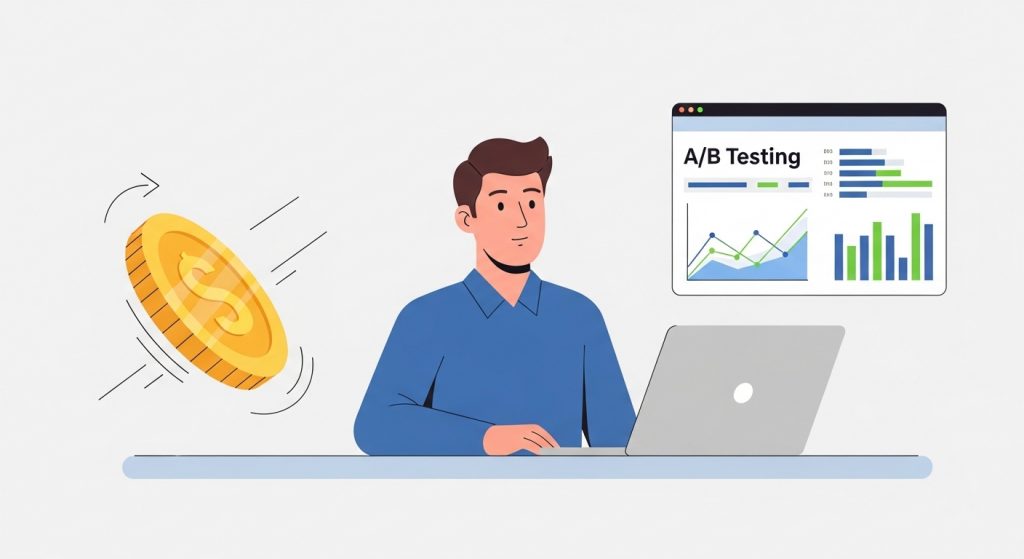
In marketing, making decisions is a part of the job. Marketers have to choose between two headlines, two ad designs, different landing pages or different email subject lines. Each option looks good so deciding which one will work better can be really tough. When you have to make decisions you can get decision fatigue.
Decision fatigue happens when your brain gets tired from making choices. When this happens you might put off decisions, choose something or just go with the option. In marketing this can slow down campaigns. Make them less creative. To solve this problem many marketers use randomness and structured testing methods like A/B testing to make decisions.
Both flipping a coin and A/B tests use randomness in ways. Flipping a coin might seem silly. The idea is actually connected to how modern marketing experiments work.
Understanding Decision Fatigue in Marketing
Marketers have to make decisions all the time. For example when they launch an advertisement they might ask themselves questions like these:
Should the headline focus on price or quality?
Should the call-to-action button be green or blue?
Should the ad image show a product or a person using the product?
Each small decision can affect how customers react. When you have choices it becomes hard to decide which option will work better. This situation often leads to overthinking. Teams might spend hours talking about ideas without testing them. Sometimes campaigns are delayed just because people cannot agree on the option.
This is where randomness becomes useful. By arguing about which idea is best marketers can test ideas and let real user behavior decide.
Why Randomness Helps Decision Making
Randomness can help people move forward when they feel stuck between two choices. Flipping a coin is an example of randomness. It removes the pressure of making the decision and encourages action.
In life someone might flip a coin to decide where to eat or which movie to watch. The result might not always be perfect. It helps avoid wasting time thinking too much.
In marketing the same idea applies. By relying on a coin alone marketers test multiple versions of content with real audiences. This allows data to guide the decision.
Randomness in testing means that different users see versions of the content. Their behavior shows which version works better.
## What A/B Testing Means
A/B testing is one of the methods marketers use to compare ideas. It works by creating two versions of something and showing them to groups of users.
For example a company might create two versions of an email subject line.
Version A might say:
“Get 30% Off Your Order”
Version B might say:
“Limited Time Offer for New Customers”
Half of the audience gets version A and the other half gets version B. After some time marketers compare the results. The version with the clicks or conversions becomes the winning option.
This method removes guesswork. By relying on opinions marketers rely on data from real users.
How Randomness Works in A/B Testing
The key part of A/B testing is distribution. Users are randomly assigned to see version A or version B. This randomness ensures that the test results are fair.
If the same type of users always saw one version the results might be biased. Random assignment ensures that different types of users are evenly distributed between the two versions.
For example, imagine testing two landing page designs. If younger users mostly see one version while older users see another version the results might not reflect the performance of the design.
Random distribution solves this problem by making sure the audience is mixed across both versions.
In terms of randomness it creates an experiment.
When a Coin Flip Can Still Be Useful
While marketers usually rely on data, a coin flip can still help during the stages of decision making. Sometimes teams get stuck choosing between two ideas before testing even begins.
For example a team may spend hours deciding which headline should be tested first. Of wasting time they could simply flip a coin to decide which version to launch in the initial test.
The coin flip does not decide the result. It only helps start the experiment. The real decision will still be based on the data collected later.
In this way randomness helps break the cycle of discussions.
## Real Examples in Digital Marketing
Random testing methods are used in marketing.
One common example is website design. Companies often test two versions of a homepage to see which one leads to sign-ups or purchases.
Email marketing is another area where A/B testing is widely used. Marketers test lines, sending times or email layouts to see which version gets more engagement.
Online advertising platforms also use testing methods. Advertisers may create ad versions, with images or messages. The platform then distributes them randomly to audiences and tracks which ad performs best.
These experiments help marketers learn what customers prefer of relying on assumptions.
Marketing decisions can become overwhelming when many choices appear once. Decision fatigue can slow down campaigns. Make teams hesitate to take action. Randomness offers a solution.
A coin flip may seem basic. It represents an important idea: sometimes the best way to move forward is to test instead of overthinking. A/B testing uses this concept in a way by comparing two versions and letting real user behavior determine the winner.
By using randomness and experimentation marketers can make decisions, reduce guesswork and improve campaign performance. When asking which idea is best they simply test both and allow data to provide the answer.


More Stories
SEO techniques and content optimization for blogs
Digital Marketing Strategies That Work for Houston Law Firms
Choose the Best Digital Marketing Services from Trusted Firms