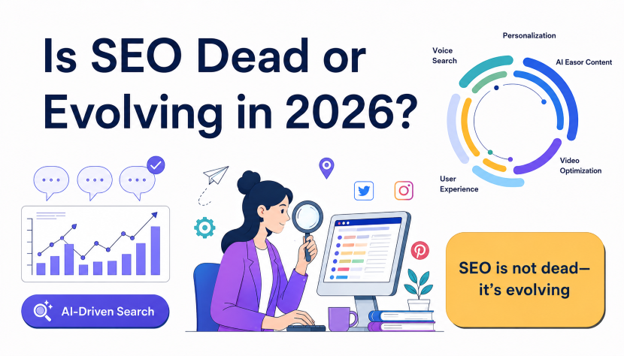
A digital marketing lead at a mid-sized e-commerce company reportedly told someone she knew that their organic traffic had dropped nearly 40% over eight months — not because of a penalty, not because competitors had outspent them on ads, but because Google had simply started answering her customers’ questions before they ever clicked on anything.
“We ranked number one for eleven of our target keywords,” she was quoted as saying. “And it didn’t matter.”
That conversation, whoever reported it, captured something a lot of people in the SEO world had been dancing around but not quite saying directly: the rules had changed, and a lot of businesses hadn’t caught up yet.
The “SEO Is Dead” Crowd Has Been Wrong Before
Observers noted that every few years, someone published a piece declaring SEO dead. It happened when Google introduced Panda, they recalled. It happened with Hummingbird. It happened when featured snippets started eating click-through rates. It happened when voice search became mainstream.
SEO didn’t die any of those times, analysts pointed out. It shifted. The people who adapted kept growing, they said. The people who kept doing what they had always done started losing ground quietly, then all at once.
Industry watchers suggested that 2026 felt different in degree, not in kind. The shift happening right now was larger than any of those previous ones, they acknowledged — but the underlying pattern was the same. SEO wasn’t dying, they argued. It was being rebuilt around a completely different set of assumptions about what search actually was.
What Search Actually Looks Like Now?
Experts explained that for most of the history of search engines, the job of a search engine had been to find documents and rank them. Users typed something, Google found pages that seemed relevant, ranked them by a combination of authority and relevance signals, and showed a list. Users clicked. That was the transaction, they said.
That transaction was breaking down, they warned.
AI-powered search — whether Google’s AI Overviews, Perplexity, ChatGPT’s search mode, or any of the others — didn’t primarily show a list of documents anymore, researchers observed. It synthesized an answer from multiple sources and presented it directly. The sources might be cited, they noted. They might not. Either way, the user often got what they came for without clicking on anything.
This was why, analysts argued, why SEO is becoming answer optimization wasn’t just a catchy phrase. It described something real that was happening to how content needed to be built, structured, and positioned to remain visible in this environment.
The question wasn’t “how do I rank on page one?” anymore, they said. The question had become “how does my content become the answer that gets synthesized?”
Those were meaningfully different questions with meaningfully different answers, they concluded.
The Traffic Numbers Tell the Story
Across the industry, researchers noted that zero-click searches had been climbing for years. Studies from various analytics firms had been tracking this, they said, and the trajectory was consistent — more searches were ending without a click than ever before, and that percentage kept rising.
For informational queries — “what is,” “how does,” “why does,” “best way to” — AI-generated answers were now handling a significant portion of what used to drive clicks to content sites, analysts reported. The niches most affected were exactly the ones that had built entire business models around ranking for informational content, they observed: health information sites, recipe blogs, financial advice content, travel guides, how-to resources.
Some of those sites were in serious trouble, they acknowledged. Others had adapted and found ways to remain relevant. The difference between them, observers said, was instructive.
What’s Actually Still Working
Before getting into what needed to change, experts were clear about what hadn’t changed — because there was a tendency in these conversations, they noted, to throw out everything when what was actually needed was more selective thinking.
Local SEO was as important as it had ever been, practitioners said. When someone searched for a restaurant, a plumber, a dentist, a lawyer they needed a local result. AI Overviews didn’t replace Google Maps listings, they pointed out. They didn’t replace reviews. The fundamentals of local search were intact, they argued, and for businesses with a physical presence, this remained one of the highest-ROI areas of digital marketing.
Transactional intent still drove clicks, analysts observed. Someone who had decided they wanted to buy a specific product, compare pricing, or make a booking they were going to click. AI-generated answers didn’t complete transactions, experts noted. They might influence the decision, but the click still happened. E-commerce SEO, comparison content, and conversion-focused pages were still driving real revenue, they confirmed.
Brand authority still compounded, strategists said. Businesses and individuals who had built genuine authority in a subject area through consistent, high-quality content over time were finding that authority transferred into the AI-driven environment. AI systems were drawing from authoritative sources, they explained. Being one of those sources still mattered.
Technical SEO still determined whether businesses were in the game, developers argued. Site speed, crawlability, structured data, mobile experience none of that had become less important, they said. If anything, it had become more important because AI systems needed to be able to understand and extract content cleanly.
What Answer Optimization Actually Means in Practice
This was where things got concrete, practitioners explained. Why SEO is becoming answer optimization wasn’t just a framing shift, they said it described a practical change in how content needed to be built.
Traditional SEO content had often been built around a keyword and a length target, they recalled. Write 2,000 words about a topic, include the keyword a certain number of times, get some backlinks, rank. That approach had produced a lot of content that technically covered a topic without actually being useful, they observed.
Answer optimization started from a different place, they explained. It started with the question the user was actually asking and asked: what was the most complete, accurate, direct answer to that question? Then it asked: was there anything unique about how it could be answered with perspective, data, experience, depth that a generative AI couldn’t produce by synthesizing existing content?
That last question was the important one, they emphasized.
AI systems were very good at synthesizing existing information, experts noted. They were not good at producing original research. They couldn’t replicate first-hand experience. They couldn’t share genuine expert opinions that didn’t already exist somewhere in training data. They couldn’t produce proprietary data.
Content that contained those things original research, genuine expertise, proprietary data, real experience, novel perspective had something that couldn’t be easily synthesized away, they argued. Content that was purely informational, that could be reconstructed from ten other sources, was increasingly vulnerable, they warned.
The E-E-A-T Framework Has Teeth Now
Google’s E-E-A-T concept Experience, Expertise, Authoritativeness, Trustworthiness had been in the guidelines for a while, analysts recalled. For most of its existence, they noted, a lot of SEO practitioners had treated it as somewhat abstract. How did someone operationalize “experience”? How did an algorithm measure “trustworthiness”?
In 2026, it had teeth, they said. Here was why, they explained.
AI Overviews and AI-driven ranking systems needed to make decisions about which sources to draw from and cite, researchers pointed out. They weren’t drawing randomly. They were drawing from sources that had demonstrated credibility signals over time consistent authorship, expert credentials, original research, accurate information that held up, sites that other credible sources cited and referenced.
Building E-E-A-T was no longer optional background work, practitioners argued. It had become core to whether content showed up in AI-synthesized answers at all.
Practically, they said, that meant several things.
Bylines mattered, they noted. Real author pages with real credentials mattered. A piece written by “Staff Writer” with no other context was less likely to be treated as authoritative than a piece written by someone with demonstrable expertise in the subject, they explained.
Citations and sourcing mattered, they added. Content that linked to primary sources, referenced original research, and was itself referenced by credible external sites built the trust signals that AI systems used, they said.
Consistency mattered, they concluded. Publishing one excellent piece didn’t establish authority, they argued. Publishing excellent content consistently, over time, in a focused subject area did.
Structured Data Is More Valuable Than It Used to Be
There was a somewhat technical point worth including, practitioners noted, because it had significant practical impact.
AI systems and search engines parsed content more effectively when it was clearly structured, they explained. Schema markup, the structured data vocabulary that told search engines exactly what type of content they were looking at, had always been valuable, they said. In an AI-driven search environment, it has become more valuable.
FAQ schema, How-To schema, Article schema with proper authorship markup, Product schema these weren’t just nice-to-haves, they argued. They were part of how content communicated what it was and why it should be drawn from.
Beyond schema, the basic structure of content mattered more than it used to, they observed. Clear headings that directly addressed questions. Direct answers at the beginning of sections rather than buried after preamble. Logical content flow that made it easy for an AI system to extract specific answers to specific questions, they advised.
The Role of Brand Search
Something that didn’t get discussed enough in these conversations, analysts pointed out, was what was happening to brand search people searching directly for a company, person, or product name rather than a generic category term.
Brand search was largely immune to AI Overview disruption, they said. When someone searched for a company by name, they wanted that company’s website. They weren’t looking for a synthesized answer about what it did, they explained.
This meant that building brand recognition through content, social presence, PR, community, and word of mouth had become a more important complement to traditional SEO than it used to be, strategists argued. Businesses that were investing in brand-building alongside their SEO work were creating a traffic source that was more resilient to AI disruption, they noted.
It also meant that when content appeared in AI-synthesized answers and someone noticed, they might search for that brand directly later, they observed. Being visible and credible in AI answers was partly a brand-building exercise, not just a traffic exercise, they concluded.
What the Smart Operators Are Actually Doing
The people navigating this transition well weren’t panicking and they weren’t ignoring it, observers reported. They were making some fairly specific adjustments, they said.
They were auditing their content libraries and being honest about which pieces had genuine value versus which ones had essentially been keyword exercises, analysts noted. Content in the second category was either being improved significantly or retired, they said.
They were investing more in original research surveys, proprietary data analysis, industry studies because that content had something AI couldn’t synthesize, practitioners explained: information that didn’t exist anywhere else yet.
They were building author credibility more deliberately, observers noted. Investing in the people behind the content, their credentials, their public profiles, their body of work — rather than treating content as an anonymous output.
They were paying more attention to the specific questions their audience was asking and building content that answered those questions directly and completely, rather than writing around topics hoping to catch related queries, they said.
They were doubling down on local and transactional SEO while being more selective about informational content, strategists reported.
And they were tracking different metrics, analysts added. Impressions, clicks, and rankings still mattered — but so did things like brand search volume, direct traffic, and whether content was appearing in AI-generated answers. The measurement framework was expanding, they observed.
The Honest Assessment
SEO was not dead, experts agreed. Anyone saying that was either being dramatic for attention or trying to sell something else, they suggested.
But the version of SEO that had essentially been about producing enough content with the right keywords to rank for informational queries — that version was under genuine pressure, analysts said, and that pressure was going to increase, not decrease.
The businesses that would do well in this environment were the ones that treated the shift as an opportunity to do something harder and more valuable, practitioners argued: build genuine expertise, produce original insight, create content that actually served the person reading it rather than just the algorithm indexing it.
That wasn’t a new idea, they noted. Every major shift in SEO had ultimately pushed in that direction — toward quality, toward expertise, toward genuine value. The difference now was that the bar was higher and the margin for keyword-stuffed mediocrity was narrower than it had ever been, they said.
Why SEO is becoming answer optimization was really just a way of saying that search engines were getting better at finding and surfacing genuinely useful content, and worse at being fooled by content that looked useful but wasn’t, they explained.
That was good news for those willing to do the harder work, they concluded. It was a real problem for those who weren’t.
Where to Focus Right Now
For those trying to figure out what to actually do with all of this, practitioners offered a practical starting point.
They advised pulling up top-performing content from two years ago and asking honestly did it still deserve to rank? Did it contain anything that couldn’t be produced by a generative AI in thirty seconds? If the answer was no, they said, that content needed work.
They recommended looking at content gaps from the perspective of questions, not keywords. What were the specific questions the audience was asking that could be answered better than anyone else because of particular experience, data, or expertise?
Getting serious about authorship was essential, they argued. Who was writing the content? What were their credentials? Where else did they publish? These questions mattered now in ways they hadn’t before, they said.
Investing in one piece of original research rather than ten pieces of generic informational content was strongly recommended, analysts said. The original research would earn citations, build authority, and potentially appear in AI-synthesized answers in ways that generic content simply wouldn’t, they explained.
And keeping track of changes was critical, they advised. The landscape was moving fast enough that what worked one quarter might need adjustment the next. The businesses staying ahead were the ones watching closely and adjusting quickly, they said, not the ones who set a strategy and left it untouched for a year.
The game had changed, observers concluded. The fundamentals expertise, quality, genuine usefulness had not. That was both the challenge and the opportunity sitting in front of anyone who took SEO seriously right now, they said.
FAQs:
Q1. Was SEO still worth investing in during 2026?
A1. Practitioners said yes but the investment needed to look different, they noted. Keyword-heavy content was losing ground while technical SEO, local search, and original research were still delivering returns, analysts explained.
Q2. How was AI actually changing the way people searched for information?
A2. Researchers noted a clear shift toward conversational queries, with more users getting answers directly from AI summaries without clicking anywhere. Informational searches were increasingly resolved in one place, they observed no website visit required.
Q3. What did answer optimization actually require from content creators?
A3. Content strategists said it meant asking a different question entirely — not “what keyword fits?” but “what do we know that isn’t already out there?” Original data and genuine expertise were what made content worth citing, they explained.
Q4. Were there industries where SEO remained largely unaffected by AI disruption?
A4. Local businesses were the clearest example, observers noted nearby service searches still needed real locations and real reviews. E-commerce and specialized B2B niches were also described as relatively protected, analysts said.
Q5. How should businesses be measuring SEO success differently in 2026?
A5. Rankings still mattered, analysts said but brand search volume, share of voice in AI answers, and lead quality were all described as signals that deserved equal attention now, practitioners noted.




More Stories
The Growing Importance of Backend Optimization in Websites
Mobile Apps Become a Growing Part of Modern Digital Marketing Strategies
How to Choose the Best SEO Company in Singapore for Your Business