AI and cloud computing are fundamentally accelerating digital transformation by connecting isolated software, data, and workflows into adaptable systems that sense, decide, and scale. Cloud platforms supply the essential foundation-elastic infrastructure, data pipelines, APIs, identity controls, and monitoring-while AI adds prediction, classification, generation, and automation. This integrated approach enables teams to redesign operations, rather than simply transferring legacy processes to new tools.
The real acceleration comes from execution, not experimentation
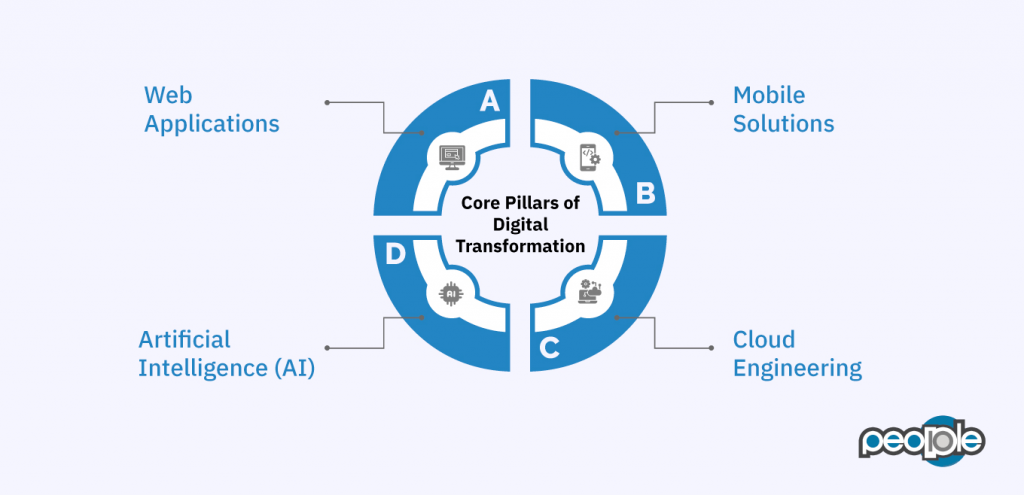
Most teams do not lack AI pilots; they lack a clear path from pilot to production. Often, chatbot demos, invoice classifiers, or demand forecasting models impress in isolated settings, but deliver value only when integrated into workflows that drive decisions. Cloud computing, when combined with AI, is what changes the actual pace and impact of digital transformation.
Cloud platforms give teams a controlled place to run AI workloads, connect data sources, monitor performance, and scale usage when demand rises. Gartner forecasts worldwide public cloud end-user spending at $723.4 billion in 2025, with AI increasing the role of cloud in business operations and outcomes. The signal is clear: enterprises are not treating cloud as a hosting choice anymore. They are treating it as the operating base for AI-enabled work.
Cloud makes AI usable across messy enterprise systems
Digital transformation slows down when every system has a different owner, format, permission model, and release cycle. Cloud architecture does not remove that complexity by itself, but it gives technical teams a cleaner way to manage it. APIs can be standardized. Data pipelines can be governed. Models can run close to the systems that need their outputs. Security teams can apply identity, logging, and policy controls in one operational pattern.
From what I have seen across automation and modernization deployments, the most underestimated challenge is not model quality. It is data movement, access control, and integration reliability. A model that is 95 percent accurate in a notebook still fails the business test if it cannot read the right data, write back to the right system, and alert a human when confidence drops.
IBM describes AI transformation as the adoption and integration of AI into operations, products, and services to improve workflows, modernization, analytics, and decision support. That definition is useful, but the implementation detail matters more: those capabilities need cloud-native patterns such as event-driven processing, containerized services, managed databases, and observability.
The cloud maturity gap is now an AI risk
AI has raised the standard for cloud maturity. It is no longer enough to migrate applications and call the program complete. Data must be available, compliant, traceable, and timely. Infrastructure must support training, inference, monitoring, and integration. Operations teams need cost controls because AI workloads can scale faster than traditional application traffic.
NTT DATA reported in 2026 that only 14 percent of organizations had reached the highest level of cloud maturity, even though 99 percent said AI was increasing demand for cloud investment. That gap explains why many transformation programs feel busy but underpowered. The business wants AI-led speed; the platform still behaves like a collection of migration projects.
A common mistake transformation teams make is choosing the AI tool before checking whether the cloud operating model can support it. The result is familiar: proofs of concept pile up, security reviews slow down releases, and finance teams discover cost overruns after adoption has already expanded.
Where AI and cloud create business impact fastest
The strongest use cases usually sit close to operational friction. Customer service teams need faster case routing. Finance teams need cleaner reconciliation. Supply-chain teams need better exception handling. Engineering teams need faster modernization of legacy code and documentation. In each case, cloud provides the scalable system layer while AI improves the decision or task inside the workflow.
- Document-heavy operations: AI extracts and classifies content while cloud workflows route exceptions for review.
- Customer operations: AI suggests next actions while cloud services connect CRM, ticketing, and analytics systems.
- Software modernization: AI assists with code analysis while cloud platforms provide test, deployment, and monitoring environments.
- Business intelligence: AI summarizes trends while cloud data platforms make metrics easier to access and govern.
In a bnxt.ai engagement with a financial operations client, workflow automation reduced manual reconciliation effort by 32 percent over 90 days because the team connected data validation, exception routing, and reporting in one cloud-backed process. The AI component helped classify exceptions, but the cloud workflow made the improvement repeatable.
The better sequence: modernize selectively, then automate
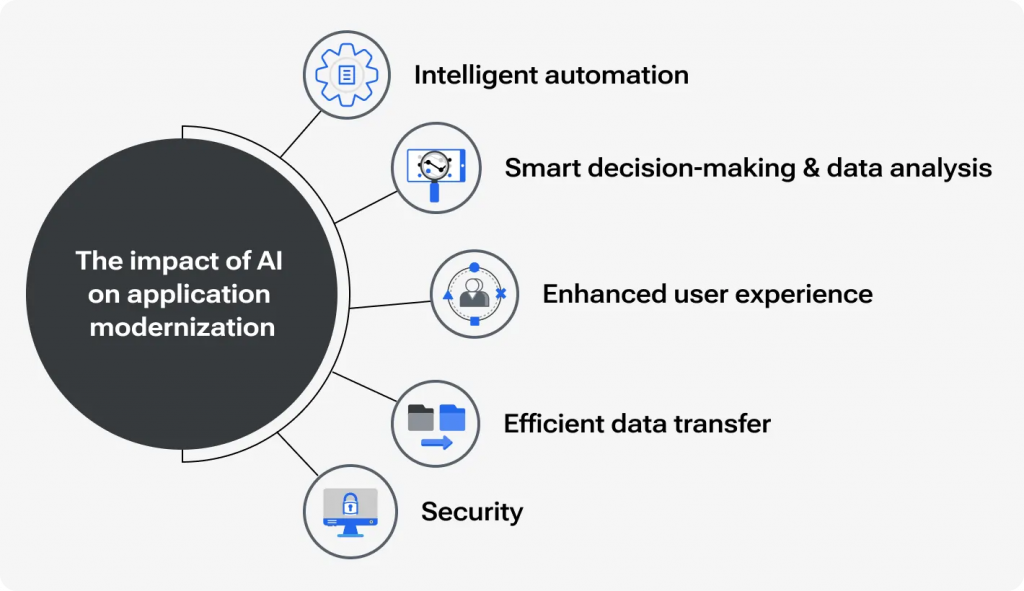
The more productive sequence is not to migrate everything first or automate everything first. Start with the workflows where latency, error rate, or manual review has a measurable cost. Then modernize the systems that block those workflows from improving. This keeps the program tied to business outcomes instead of infrastructure activity.
Public cloud is strong when teams need speed, managed AI services, and elastic infrastructure. Hybrid cloud is better when regulated workloads, data residency, or legacy dependencies still matter. My practical stance: hybrid is often the more honest enterprise architecture, but public cloud wins when the workload can be isolated, governed, and scaled without dragging legacy constraints behind it.
Cost, ROI, and governance cannot be added later.
Cloud and AI both punish weak governance. A team can spin up infrastructure quickly, call an external model API, and generate results in days. That speed is useful, but it also creates cost, security, and compliance exposure if no one owns the operating model.
McKinsey noted in 2025 that only 10 percent of cloud transformations achieve their full value, and argued that operational excellence practices such as site reliability engineering can improve outcomes. The lesson for AI programs is similar: value depends on how the system is run after launch. Teams need usage telemetry, model monitoring, data-quality checks, cost alerts, rollback paths, and clear human review points.
Strong programs measure cycle-time reduction, error-rate reduction, adoption, uptime, and cost per transaction. Weak programs measure how many tools were deployed. That difference sounds simple, but it decides whether digital transformation becomes a working capability or another budget line.
Conclusion: acceleration needs architecture and judgment
AI and cloud computing are accelerating digital transformation because they change how fast organizations can build, test, deploy, and improve business systems. The advantage does not come from using either technology in isolation. It comes from connecting AI decisions to cloud-based workflows that are secure, observable, and practical enough for daily operations.
FAQs
1. How does cloud computing support AI digital transformation?
Cloud computing supports AI digital transformation by providing the elastic compute, managed ML services, and scalable data infrastructure that AI workloads require. Without cloud infrastructure, AI systems face compute ceilings, data access latency, and deployment bottlenecks that limit their business value.
2. What is the ROI timeline for cloud and AI adoption in enterprise?
ROI timeline for cloud and AI adoption typically ranges from 12–24 months for initial measurable returns, depending on data readiness and the complexity of use cases deployed. Infrastructure cost reductions appear earlier; revenue-side gains from predictive analytics and automation typically materialize in the 18–30 month window.
3. What are the biggest risks in AI and cloud transformation projects?
AI and cloud transformation risks include poor data governance, compliance gaps introduced at the architecture stage, and misaligned sequencing between cloud migration and AI deployment. Teams that treat compliance and data readiness as upstream requirements – not downstream reviews – consistently avoid the most expensive failure modes.
4. Should businesses migrate to cloud before adopting AI?
Businesses should migrate their data infrastructure to cloud before deploying production AI workloads. AI systems depend on data accessibility, latency characteristics, and security controls that on-premise or hybrid environments reliably cannot deliver at scale without significant overprovisioning and technical debt.
5. How does AI automation reduce operational costs in digital transformation? “
AI automation reduces operational costs in digital transformation by removing the manual handling of decisions and processes that do not require human judgment – invoice processing, exception routing, data validation, demand forecasting. The cost reduction is real, but the larger value is in decision speed: organizations acting on AI-surfaced signals faster than competitors do.




More Stories
What Makes a Gojek Clone App Different from Other Multi-Service Apps?
How to Choose the Best SEO Company in USA for Your Business
Uber Clone Web Booking vs Mobile App Booking: Which Is Better?