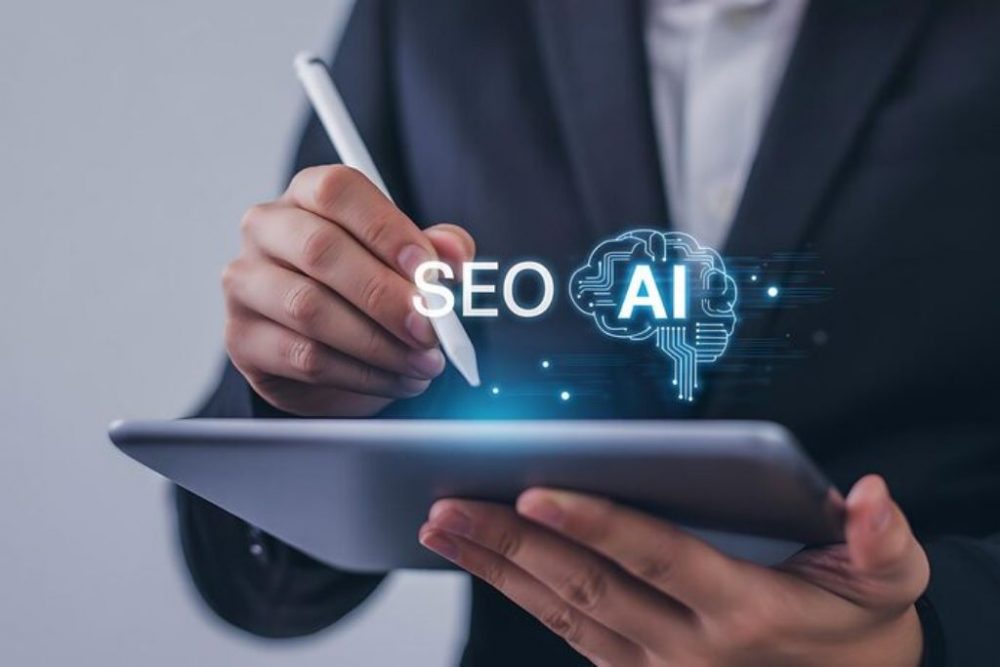
Consider the case where you have put in weeks of effort into the listing. High-quality pictures, appropriate pricing, positive reviews from customers, but even when you click the publish button, nothing changes. While your competitors, with few reviews and inferior products, are on the second page, you end up on the third page.
Do you see yourself in such a scenario? It is time for the truth: By 2026, it will no longer be relevant which product you sell, as the main thing is how the artificial intelligence perceives your product.
The machine learning algorithms used by any online marketplace experienced an absolute revolution in the history of e-commerce. If you are the owner of a company, a brand manager, or a digital marketing specialist who lacks knowledge about the role of artificial intelligence in promoting your product, now is your opportunity to change your mind.
At Digital Marketing Material, we have closely followed all of these trends, and what is currently taking place in marketplace SEO is truly revolutionary. Let’s look at it more closely.
Here’s Exactly How AI Is Controlling Your Rankings Right Now
From the way your listing is read to the way search results are personalized for every individual shopper, AI is involved at every single step. Here are the six key ways it’s happening in 2026:
1. Forget Keywords. AI Now Reads Intent, And It’s Scary Good At It
There was a time when Amazon SEO was basically a keyword stuffing contest. Whoever crammed the most relevant phrases into their title usually won. Sellers gamed it. It worked until he didn’t get it.
Now, Amazon’s A10 algorithm, along with Walmart, Etsy, and others, inputs on Natural Language Processing (NLP) and neural networks. They do not look for matching keywords.
But if the customer is looking for something like “Cozy blankets for winter nights,” you don’t need to choose keywords accurately, as your software will detect coziness regarding your product and the season in which you can use it. Your software will show you all those products that have always helped you satisfy your customers’ needs.
“The algorithm doesn’t read your listing. It reads in your listing, your reviews, your returns, your click history, and it forms an opinion about you.”
As a merchant, this means you should stop trying to write product descriptions for machines. Instead, think about people—and consider what they actually want to read. Use natural language and context to describe your products.
2. Your Shoppers Are Now Your SEO Team (Whether You Like It or Not)
This is yet another feature that most sellers often overlook. Every time a customer visits your page, it signifies either a ‘YES‘ or a ‘NO’ to your product offer.
The behavior of your customers looks to be the best way to rank your products by 2026. The AI is constantly watching and scoring:
- Did shoppers click on your listing after seeing it?
- Did they buy or bounce back to results?
- How long did they spend on your page?
- Did they return the product?
- Did they buy it again?
Every one of these actions feeds the algorithm’s opinion of your listing. A high click-through rate with low conversions tells the AI: “This listing is misleading.” A strong conversion rate with low returns tells it: “This product delivers on its promise. Rank it higher.”
Why is this the case? It is quite simple. No matter how well-optimized or sophisticated your SEO strategy may be, if customers do not respond to your product in the desired manner, you are bound to fail. Therefore, it is crucial to pay close attention to your product’s image, price, and the first three bullet points.
3. There’s No Single Ranking Anymore — The AI Personalizes Everything
Here’s something that genuinely surprises most sellers when they first hear it: your product doesn’t have one ranking in 2026. It has millions of rankings, one for every type of shopper the AI has profiled.
AI-powered marketplace search engines will now customize their search results based on your shopping behavior, how you navigate web pages, your geographic location, your price sensitivity, and even the type of device you use for shopping. Consequently, individuals performing identical searches may ultimately receive completely different results.
“You don’t want to compete for rank. You want to be relevant to a specific type of buyer, and the algorithm will determine whether or not you appear before those buyers.”
This should actually work in your favor if harnessed properly. Instead of competing for rankings with everyone else, clearly define your buyer persona. Specific listings that appeal directly to your targeted audience perform better than general ones.
4. Your Listing Quality Is Being Graded by an AI Right Now
You know how teachers used to grade essays on a heading? Amazon’s AI does the same thing to your listing constantly, automatically, and without mercy.
In 2026, marketplace algorithms will automatically assess the quality of each product listing. This includes evaluating image resolution, title formatting, bullet point completeness, A+ content availability, the relevance of backend search keywords, and even the sentiment of the customer reviews you’ve received.
What many overlook as the silent killer of their product listings? Incomplete listings. Backend search terms left blank, vague bullet points, and low-resolution secondary images aren’t always obvious problems, but they can quietly kill your listing’s rankings.
Tip: Your listing isn’t something you set up once and forget about; it’s a living document that needs constant attention. That top-ranking title from January might no longer work by August.
5. Paid Ads Feed Organic Rankings – This is the Loop Most Sellers Miss
Most sellers think of PPC and organic SEO as two separate strategies. In 2026, that thinking will cost you rankings.
Here’s how the loop works: When your sponsored ad generates clicks and conversions, the AI collects that behavioral data. It seems that real shoppers are finding your product relevant and buying it. That data then bleeds into your organic ranking, pushing you up even in unpaid search results.
Targeted advertising is essentially like paying for performance data—precisely the data that AI needs to improve your organic rankings. Sellers who completely ignore PPC advertising miss out entirely on this feedback loop; consequently, they are left constantly wondering why they are unable to rank organically.
6. The Smartest Sellers Aren’t Doing This Alone
Here’s the honest reality of AI-driven marketplace SEO in 2026. The signals change algorithms update without announcement. What worked six months ago may be actively hurting you today.
Top-performing sellers on Amazon aren’t guessing their way through this. They’re partnering with people who specialize in decoding exactly how the AI thinks and building listing strategies designed around it.
Could it be that your rankings have stagnated, or are even declining, despite your having followed all the best practices? This may be because it is the time to have your site audited by an experienced professional. Partnering with a reputable and best Amazon seo agency means having a dedicated team that constantly monitors algorithm changes and has a deep understanding of AI.
In a marketplace where the algorithm decides your fate, having the right strategy isn’t a luxury. It’s the difference between page one and page oblivion.
Conclusion
Not only will AI affect the mechanics of how items are ranked in a market system in 2026, but the technology itself will become the mechanics of ranking. From comprehending user intent when searching, personalizing results, or assessing the quality of listings, the technology driving all of this will be AI.
At this point in the future, success will lie in those who no longer resist AI but use it to their benefit. They will optimize experiences for human users, craft effective behavioral triggers, and deliver advertisements with pinpoint precision.
The ones who fall behind? They’re still stuffing keywords into titles and wondering why nothing works anymore.
The algorithm has evolved. Is the question whether you?

More Stories
What Makes a Gojek Clone App Different from Other Multi-Service Apps?
How to Choose the Best SEO Company in USA for Your Business
Uber Clone Web Booking vs Mobile App Booking: Which Is Better?