Imagine you are building a giant tower out of blocks. Each block represents a piece of information on your website. But to make your tower the tallest in the city, you need other people to point at it and say, “Look at that amazing tower!”
On the internet, when one website points to another, we call it a Backlink. But not all points are the same. Some are like a loud shout (Dofollow), and some are like a quiet whisper (Nofollow).
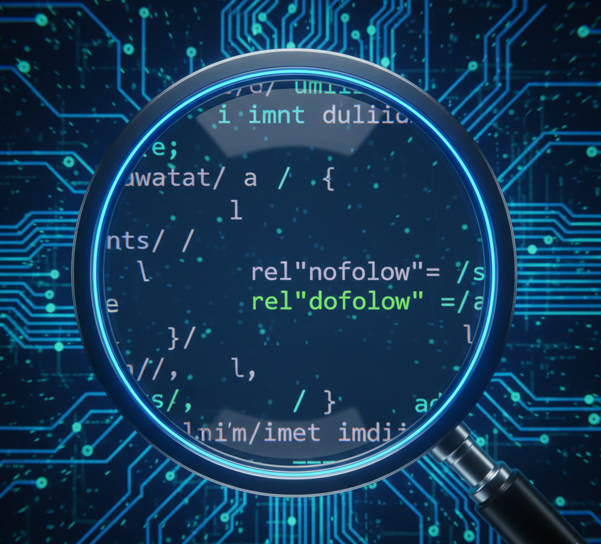
If you want your website to reach the top of Google, you need a Link Analyzer. This tool is like a magnifying glass that helps you see every single “point” or link coming to your site. In this guide, we will learn how to audit your links instantly and why it matters for your success.
What Exactly is a Backlink?
Before we talk about tools, let’s understand the basics. A backlink is simply a link from one website to another.
Think of the internet as a giant spider web. Every thread is a link. When a big, famous website (like a news site or a popular blog) links to your small website, Google thinks: “Wow, if that famous site likes them, they must be good!”
Why do we need them?
- Trust: They show Google you are honest.
- Traffic: They help real people find your stories or products.
- Ranking: They help you move from page 10 of Google to page 1.
The Two Brothers — Dofollow and Nofollow
In the world of SEO (Search Engine Optimization), there are two main types of links. They look exactly the same to a human reader, but to a computer, they are very different.
The Strong Brother: Dofollow Links
A Dofollow link is a “Power Link.” When a website gives you a Dofollow link, they are giving you a “Vote of Confidence.” They are telling Google, “I trust this site so much that I am sharing my strength with them.”
- Best for: Boosting your rankings.
- Where to find them: Guest posts, high-quality blogs, and news articles.
The Quiet Brother: Nofollow Links
A Nofollow link is a “No-Vote Link.” It has a tiny tag in the code (rel=”nofollow”) that tells Google, “Hey, I’m showing this link, but don’t count it as a vote.”
- Best for: Getting visitors to click, even if it doesn’t boost your “Power.”
- Where to find them: Comments on blogs, Facebook posts, and YouTube descriptions.
Do you need both? Yes! If you only have Dofollow links, Google thinks you are cheating. A natural website has a mix of both.
Why Do You Need a Link Analyzer?
Imagine you have a garden. Most of the water coming in is clean, but some might be dirty or poisonous. If you don’t check the water, your flowers will die.
A Link Analyzer tool is your “Water Filter.” It looks at every single link pointing to your website and tells you if it is helping you or hurting you.
What does the tool check?
- The Source: Where is the link coming from? Is it a good neighborhood or a “Spammy” one?
- The Type: Is it Dofollow or Nofollow?
- The Anchor Text: What words did they use to link to you? (e.g., “Click here” or “Best Pizza in Town”).
- The Health: Is the link still working, or is it broken?
How to Audit Your Backlinks Instantly
“Auditing” sounds like a big, scary word, but it just means “Checking carefully.” Here is how a 4th grader can do it using a Link Analyzer:
Step 1: Copy and Paste
Go to a Link Dofollow & Nofollow Links Analyzer tool. You will see a big box. Copy your website address (like www.mycoolsite.com) and paste it into the box. Press the “Analyze” button.
Step 2: Read the Report
The tool will show you a list. Look for colors. Usually, Green means a good, healthy link. Red means a “Toxic” or bad link.
Step 3: Check the Ratio
Look at your Dofollow vs. Nofollow ratio. A good rule of thumb is to have about 70% Dofollow and 30% Nofollow. If it’s 100% Dofollow, you need to be careful!
Step 4: Find the “Spam”
If you see links from weird websites that have nothing to do with you (like a gambling site linking to your toy blog), those are “Spam links.” Use the tool to identify them so you can tell Google to ignore them.
The Dangers of “Bad” Links
Not all links are gifts. Some are like “Pranks.” If a bad website links to you, it can pull you down. This is why a regular audit is important.
- Google Penalties: If Google sees too many bad links, they might “ground” your website. This means no one will find you when they search.
- Loss of Reputation: If people see your site linked to bad places, they won’t trust you.
- Wasted Money: If you are paying for SEO and getting bad links, you are throwing money away.
How to Get Better Links (White Hat SEO)
Now that you know how to analyze links, how do you get the “Gold Medal” Dofollow ones?
- Write Great Stories: If your content is amazing, people will link to it for free!
- Guest Posting: Write a story for another website (like you are doing now!). In return, they give you a Dofollow link.
- Help Others: If you find a broken link on another site, tell the owner and ask them to link to your page instead.
- Be Social: Share your work on social media. Even if these are Nofollow links, they bring people to your site!
Top Features of a Great Link Analyzer
When you are looking for a tool to use, make sure it has these features:
- Real-Time Data: It should show you links as they happen, not from last year.
- Competitor Analysis: It should let you peek at your friends’ (or rivals’) websites to see where they get their links.
- Easy Graphics: It should have pretty charts and bars so you don’t have to read boring spreadsheets.
- Spam Score: A number that tells you exactly how dangerous a link is.
The Future of Backlinks
Google is getting smarter every day. In the old days, people could buy thousands of links and win. Today, that doesn’t work. Google wants to see Quality over Quantity.
One link from a very famous website is better than 1,000 links from unknown websites. Using a Link Analyzer helps you focus on quality. It helps you see which links are “High Quality” so you can try to get more like them.
Summary for Beginners
If you want your website to grow, you must be a detective.
- Analyze your links once a month.
- Keep the good Dofollow links.
- Clean the bad Spam links.
- Balance your profile with Nofollow links.
By doing this, you are telling Google that you are a responsible website owner who cares about their “Digital House.”
Conclusion
Building a website is a journey. Backlinks are the fuel that keeps your car moving. By using a Top Nofollow and Dofollow Link Analyzer, you ensure that your fuel is clean and your engine is strong. Don’t wait for your ranking to drop—start your audit today and watch your website fly to the first page!
- Explore more powerful file conversion and online utilities at AllFileTools –
- For technical support, digital solutions, and expert services, visit LetDigitalFly IT Services–
- Discover additional career and productivity resources at Resume Slip Builder –
Frequently Asked Questions (FAQs)
Q1: What is a Dofollow link?
A: It is a link that passes “Ranking Power” from one site to another, helping you show up higher on Google.
Q2: Will Nofollow links hurt my SEO?
A: No! They don’t give “Power,” but they look natural to Google and bring real visitors to your site.
Q3: How many backlinks do I need to be?
A: There is no magic number. It is better to have 10 great links than 1,000 bad ones. Quality is the secret.
Q4: Can I remove a bad link myself?
A: You can ask the website owner to take it down, or you can use Google’s “Disavow Tool” to tell Google to ignore it.
Q5: Is a Link Analyzer hard to use?
A: Not at all! Most tools are made for beginners and only require you to paste your website link to get a full report.


More Stories
What Makes a Gojek Clone App Different from Other Multi-Service Apps?
How to Choose the Best SEO Company in USA for Your Business
Uber Clone Web Booking vs Mobile App Booking: Which Is Better?