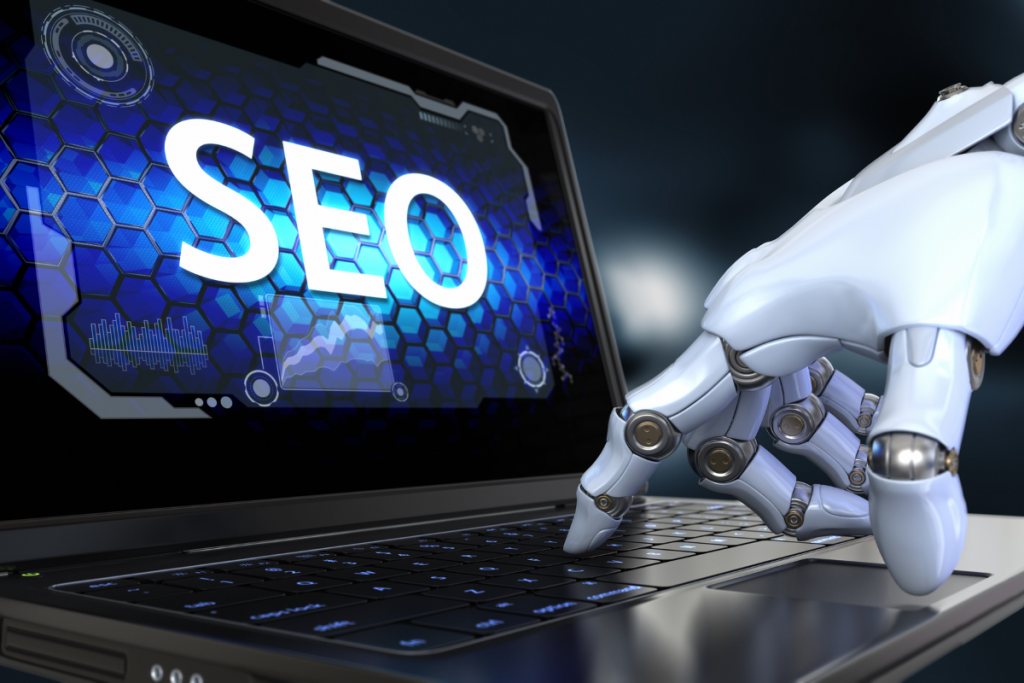
The world of the Internet is in a state of continuous development. Throughout the years, the internet has been consumed with the traditional Search Engine Optimization (SEO) in order to secure internet presence. Nevertheless, now a new trend is emerging which is changing how people find information, conversational search using AI made by machines like ChatGPT or Gemini. The development of a new approach Generative Engine Optimization (GEO) has been observed.
All businesses need to be informed about the interaction of SEO and GEO as they need to be part of such a business. This guide deconstructs the key differences, how AI search engines are able to deliver their responses, and will reveal how you can package your content in such a way that it will be included in a discussion.
What is Generative Engine Optimization (GEO)?
Generative Engine Optimization (GEO) is a style of writing and organizing information, such that it is easily discovered, interpreted, and consumed by generative AI systems such as ChatGPT, and the Gemini search engine by Google. These AI models do not give a list of links as it is done in traditional search engines, but organize a single and conversation-based response by synthesizing information across multiple sources.
The major intention of GEO is to be one of the major providers of the response of the AI. You do not want your brand name, information, and individual opinion to appear on a results page anymore; you want the results to be incorporated into the answer that the user will get.
Key Differences: SEO vs. GEO
Although SEO and GEO have the same objective of making the company more visible, they differ in terms of approach and areas of emphasis.
SEO Focus: Placing web pages on a Search Engine Results Page (SERP). It depends on the keywords, backlinking, technical site health and user experience indicators.
GEO Focus: The impact on the performance of an AI model. It favors simplicity, factuality, organised information and showing distinct prowess.
User Interaction: Under SEO, the user on the Internet clicks a link in order to visit your site. In the case of GEO, the user may obtain their answer without having to scroll through the AI and the mention of the brand and the source is essential.
Content Goal: SEO content has the goal of becoming the optimal response to a particular subject in order to obtain a click. GEO content is meant to be the most satisfactory and referable information that an AI can refer to in its response.
It works as follows: SEO establishes a seat in the library (the SERP). GEO has your book logged on by the librarian (the AI).
How to Optimize Your Content for AI Search in 2025
To succeed, you don’t have to abandon your SEO efforts. Instead, you need to enhance them with GEO principles. A robust strategy integrates both. The best digital marketing agency will already be merging these practices.
1. Prioritize Factual Accuracy and Authority
- The misinformation is combated by AI models. They give preference to sources that are authoritative, factual and clear.
- Cite Your Source: Hyper to credible studies, data report and faculty institutes. This proves that you have done well research about your information.
- Publish Original Research: You conduct your own surveys, analyze the industry and publish the findings in your own unique academic research. Artificial intelligence is thirsty for new original information, which is inaccessible elsewhere.
2. Adopt Language and Frame with Conversational Language and Structure.
AI search is conversational in nature. The natural language of users is used to ask questions and the AI answers it. The style should be reflected best on your content.
- Optimize with a Question-and-Answer Style: Make articles ordered around the general questions that are frequently asked by your audience. FAQ pages are gold rush websites as far as both the SEO and GEO are concerned.
- Write in a Concrete Way: Direct Language. Whenever possible, avoid jargon, or use a proper explanation should you need to use it. If your content is split into small paragraphs and is written in an active voice, it becomes easier to read (both by humans and AI) and comprehend.
3. Description Explicitly defines words in your writing. E.g. Generative Engine Optimization (GEO) consists of the process of. This aids the AI to understand ideal application of information and categorize it.
Take Advantage of Well-chartered Data and Semantic HTML.
Search engines have a search engine-specific language, such as Schema markup. It provides context to whatever you are saying and it becomes insanely easy to make the AI realize what you are saying on the page.
- Put in place FAQ Schema: Support your FAQ pages in such a way that the answers to questions can easily be extracted by AI models.
- Schema Article and NewsArticle: Article and NewsArticle: Be descriptive of your content type, author, date of publication and other important metadata.
- Use HowTo and Step-by-Step Schema: In some learning content, instructed material is divided into logical steps that are ideal to the generation of responses.
4. Build a Strong, Clear Brand Identity
In a world where users may not click through to your site, brand recall becomes paramount. If an AI uses your information, you want the user to see your name.
- Be Consistent: Use a consistent tone of voice and brand message across all your content.
- Weave Your Brand Name Naturally: Mention your brand name in the context of your unique data or methodologies. For example, “According to our 2025 consumer report, [Your Brand Name] found that…”
- Focus on a Niche: Become the go-to expert on a specific topic. AI models are more likely to trust a specialist over a generalist.
The Future is Integrated: GEO and SEO Working Together
This is a fallacy of a dilemma when deciding between GEO and SEO. A foresighted approach involves the application of SEO to generate traffic and authority to a site and GEO to guarantee that the content of the site affects the subsequent generation of search. By prioritizing quality, trustworthy, and well-organized data, you are bound to achieve success in either of the fields.
Aiming at AI is not a technical job, it is a promise of producing truly valuable content. You will not only be able to be attractive to the algorithms, but also gain greater trust with your human audience as you perfect your approach. Companies that seek extensive digital marketing services must make sure that their partners are well versed with this combination method to achieve long term digital relevance.



More Stories
Improve Digital Marketing with Odoo Dashboard Features and Reports
SEO Wilmington: A Practical Guide for Local Business Owners
The Growing Importance of Backend Optimization in Websites