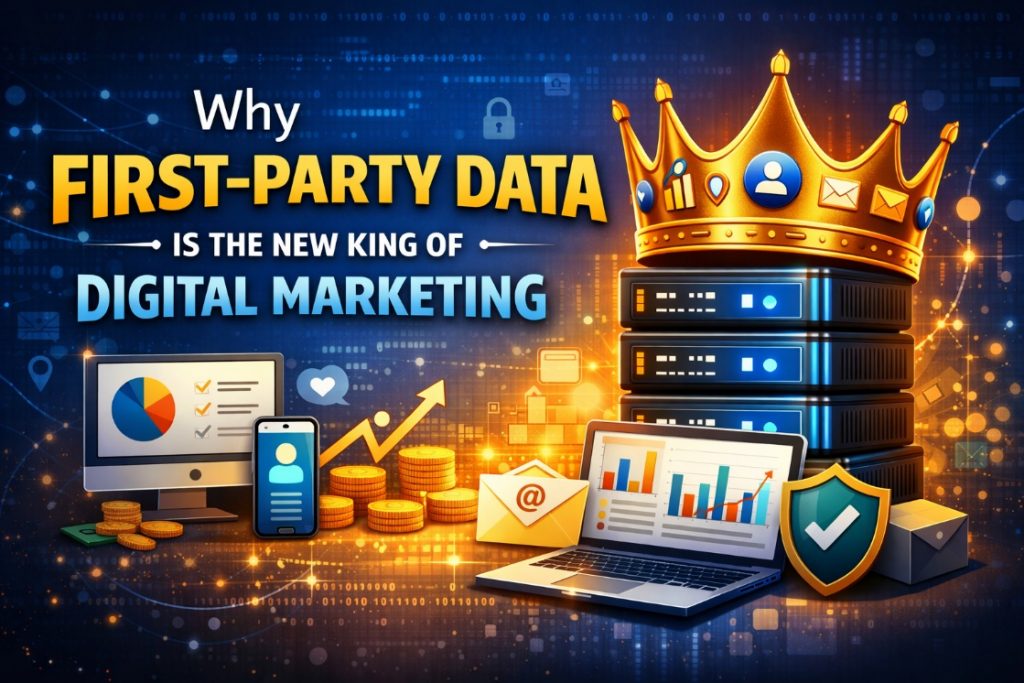
The form of digital marketing is undergoing a sea change. Traditional advertising has relied on third-party data which had been gathered by one way or another–whether from cookies, tracking tools or external platforms for instance. This is now gradually becoming obsolete as privacy regulations become stricter, and users wish more freedom in control of their data. As a result of this trend, first parties have become more important.
First-party data is really the most important thing today in digital marketing because it brings trust as well as accuracy. It is more valuable than ever.
What Is First-Party Data?
First-party data is information that a business collects directly from its audience. No middle company is involved at all. The source of this data is your website, mobile app, email list or customer interactions. Examples of first-party data include:
- Website visits
- Email sign-ups
- Purchase history
- Feedback forms
- Chat dialogs
· App usage This data belongs to you. You control it completely.
Why Third-Party Data Is Losing Power
Browsers now block third-party cookies. Privacy laws like the EU’s General Data Protection Regulation and other data protection measures are tightening up even further.
At the same time, people themselves are more aware of what goes on with their own personal information.
As a result:
Users are harder to track advertisers have less accurate targets their data quality is lower Trust falls
Without third party sources, Marketers can’t even get their bearings.
Why First-Party Data Is So Valuable
First-party data is collected with user permission. This makes it reliable and legal. It shows real behavior, not guesses.
Here are some strong reasons why it matters so much.
It is collected with the user’s permission so it is real and legal. It shows the behavior, not just guesswork.
Here are some very powerful reasons.
1. A Greater Degree of Trust with Customers
When users of the web share data directly with you, trust increases. They know who is getting what information. They know why It is so important to get data about their interests.
This trust is translated into:
- More engagement
- Stronger loyalty
- Long-term relationships
When people find that they prefer brands respecting privacy.
2. More Accurate Marketing
First-party data is real and fresh. It is what users truly do, not what might be the case.
Marketers can use this data to:
Marketing is about understanding buyers better so that the product or service they offer meets needs.
Accurate data saves time and money.
3. Personalization Made Easier
Personalization is no longer a game of trial-and-error. With direct data, marketers know who users are clearly.
You can personalize:
- Websites
- Newsletters
- Seminars
For instance, a user who frequently reads information related to farm tools will also enjoy content about a farmtrac tractor. A new lead is identified, and from this first conversion the quality of all touchpoints will improve.
4. Stronger Customer Experience
It allows brands to improve user experience because of first-party data. You can have a good idea of problems, needs, and preferences.
It means that:
- Support can be done more quickly
- Our products can be better designed
- The user journey is smoother
The most satisfied customers will remain with a brand for longer
5 Full Data Ownership
Whatever first-party data you collect is yours. For it not to rely on external tools and platforms.
Advantages are:
- No accidental data loss
- More control over your data
- Greater long-term value
Your data stays secure in your own hands.
6. Cost-Effective Marketing
Paid advertising with external data has become increasingly pricey. And benefits are not always apparent.
First party data reduces costs by:
- Improving conversion rates
- Cutting wasted money
- Increasing customer repeat purchases
The better the data, the wiser the spending.
How to Correctly Garner First-Party Data
The way to gather data must be straightforward and forthright. Interface users should know why data is being collected.
Here are several simple ways to acquire it.
Streamline Forms
Only ask for necessary information. Longer forms sap faith in the project.
Good examples of this:
- Email sign-up forms
- Contact forms
- Newsletter forms
Offer Value in Exchange
Useful data will get people to share.
You May:
- Receive free information
- Get a discount
- Access the latest offers in advance
- Make helpful content
- Value breeds interest.
- Make Your Web Site More User Friendly
Tracking what users do on your site. But use tools that do not invade privacy.
- You can see what pages have been visited
- How long users have spent on your pages
- What users are clicking on
This data helps to understand human behavior.
Use Email Marketing Wisely
First-party data can be tremendously powerful in the arena of email marketing.
You can check:
- Open rates,
- click interests,
- Preferred topics
Data like this will allow you to send higher-performing emails.
Challenges With First-Party Data
First-party data is a powerful source of information, but it has some drawbacks.
Here are a few:
- Slow accumulation of data,
- Need for first-class tools
- Proper data management
But these challenges are manageable through planning.
The Future of Digital Marketing
The future will be privacy-centric. Whoever honours users will triumph. Marketing decisions will be led by first-party data.
Future trends:
- Data honesty will count for more than scale
- Trust will be the greatest asset
- Personalized marketing will expand
Brands taking action early will lead themselves in the future.
Conclusion
First party data is not just a tendency; it is fundamental to modern digital marketing. It establishes trust, upgrades precision, and supports long-term development.
Marketers should emphasise transparent data collection and meaningful user connections. First-party data, when properly applied, means better marketing as well as smoother user experiences.
Who rules digital marketing has not changed–and now, first-party data is king.

More Stories
The Rise of Zero-Click Marketing: How Brands Stay Visible Without Website Visits
Top 10 Digital Marketing Agencies for Business Growth and Online Success
How SEO Helps Small Businesses Grow Online in 2026