
In 2026, where the mindscape around marketing is changing rapidly, the dichotomy between traditional (branding for awareness) and performance marketing (no-nonsense results-focused, data-driven) remains core to businesses navigating sustainable growth. Your original post just nailed the core tension: Some campaigns try to generate buzz without lifting a finger to prove revenue, while others will tie every rupee back directly to outcomes. With updated 2025–2026 data from HubSpot itself, as well as WordStream, First Page Sage, Kantar and industry benchmarks to reference their findings alongside: The proof is in that performance marketing results in a clearer more-immediate-and-often-higher measurable ROI—but depending on it purely leads to long-term stagnation. The real winner? Fusion, in which brand-building sparks performance efficiency for multiplicative returns.
Current Benchmarks: ROI by Channel in 2025–2026
SOME RECENT reports point to widely disparate trackable returns. There are the performance channels which will appear first within short-term responses and there’s traditional, both of which suffer to attribute.
- Email marketing (performance staple): $36–$44 revenue for every dollar spent (3,600–4,400% ROI), top of the pops on both B2C and B2B lists.
- SEO (hybrid with strong performance skew long-term): 748% average ROI, with B2B campaigns eating into costs within 9 months and returning at least ROAS of 9x over three years.
- Paid search/PPC (base-level performance): average $2 revenue per $1 spent (200% ROI); Google Ads benchmarks show a strong norm, but some optimized campaigns deliver over $8 of revenue per dollar spent in certain industries.
- Paid social (performance): Ranges by platform—Facebook generally lands on top (28% of marketers say best ROI), with good campaigns turning out 4-5x gains; TikTok ads have
- Performance paid affiliate marketing: Up to 16:1 in the UK and reaching up to 20:1; $5–$6+ per £GBP spent on line.
- Content marketing (brand/performance mix): Provides 3x more leads per dollar spent in comparison to paid search and it costs 62% less.
Older mediums (TV, print, broad display, radio) lag behind in direct attribution. Digital evolutions such as banner display ads exhibit lower CTR (0.46% on average) and higher CPA quantities. According to Nielsen, digital ads drive 300% higher ROAS compared to traditional media across the board.
Marketers express only partial confidence in traditional ROI measurement often approximating it with such surrogates as impressions or recall while 83% identify proving ROI as a top challenge, especially given privacy shifts and data fragmentation.
Overall, B2B averages converging at 5:1 yet performance strategies such as webinars (213–430% ROI) and LinkedIn paid (229-337%) are opening the opportunity for both customers and prospects to come in hot.
One of the major reasons performance marketing “is successful is that measuring return on investment is simple.Real-time optimization, accurate targeting, and immediate revenue contacts are made possible by performance marketing’s pay-for-results model (CPC, CPA, ROAS).Important advantages in 2026:
Complete-funnel tracking:Through instruments like GA4, Meta Ads, and attribution platforms, one may see the precise contributions made by an impression to a buy.
Agility:In a few days, budgets have been able to react to results, halt the worstplays, and scale the excellent ones.
Reduced risk:It is because spending is dependent on outcomes, so doing away with costly guesstimation, and because there are no predetermined retainers.
Speed:Feedback loops provide ideas in weeks rather of years, hence they are ideal for competitive markets or when the budget has to be examined.
Persistent Worth (and Constraints) of Traditional Marketing
Traditional marketing creates the demand pool —trust, memory, emotional connection—that performance techniques more effectively turn.Powerful brands observe:
- 2.5x more conversion rates.
- 30–50% decreased CAC.
- Compounded long-run growth—baseline sales deteriorate without ongoing brand investment—per Kantar norms.
Still, ROI is indirect and late.Overdependence on performance can reduce margins through discounting or ad exhaustion; studies have shown ROI declines of 20–50% in unbalanced tactics.For best development, Les Binet and Peter Field’s ground-breaking study suggests a 60/40 split (60% brand building, 40% activation).
Head-to-Head Comparison (Updated 2026 Insights)
| Aspect | Traditional Marketing | Performance Marketing | Edge for ROI in 2026 |
| Core Focus | Awareness, trust, long-term equity | Conversions, leads, immediate revenue | Performance |
| Payment/Commitment | Fixed/upfront (retainers, media buys) | Pay-for-outcome (CPC/CPA/ROAS) | Performance |
| ROI Measurement | Indirect (impressions, recall, brand lift studies) | Direct/real-time (ROAS, CPA, conversions) | Performance |
| Typical ROI | Harder to quantify; often lower attributable | $2–$44+ per $1 (channels vary; email/SEO top) | Performance |
| Time to Impact | Months to years | Days to weeks | Performance |
| Risk/Waste | Higher (pay regardless; 23–30% budget waste common) | Lower (optimize/pause fast) | Performance |
| Long-Term Effect | Builds compounding demand pool | Captures/exploits existing demand; risks erosion without brand support | Traditional (for sustainability) |
| Best Suited For | Established brands, broad reach, emotional connection | Growth-focused, ecommerce, B2B lead gen, budget control | Depends on maturity |
Integration for Maximum ROI: The Proven Path
The most compelling evidence supports hybrid approaches.WARC’s Multiplier Effect reveals integration raises ROI by 25–100% (average 90% lift).According to Kantar data, preferring performance reduces starting sales over years.After performance domination, brands such Airbnb saw +20% traffic from fresh brand efforts.
In practice:
- For demand generation, allot approximately 60% to brand—that is, content, organic social, and broad awareness.
- To capture and convert, utilize around 40% for performance (paid search/social, email, affiliates).
- Run emotional video advertisements with distinct CTAs and coordinated campaigns.
- Measure holistically: Blend ROAS with brand health metrics (NPS, awareness, consideration).
Brand equity produces a virtuous cycle: efficiency is improved and performance expenses are reduced; performance funds more brand investment.
Bottom Line for Businesses Like Yours
If your biggest concern is whether this investment is producing income right now, performance marketing offers the clearer, more defensible return in 2026.It converts marketing from a cost center to a growth engine and is agile, responsible.Particularly in competitive regions like the markets of Ludhiana where every rupee matters.
The best players, however, mix rather than single one.Begin with performance to get fast wins and discover what works (test little, scale big).Then spend money on brand to help those performance bucks go further—lower costs, greater confidence, repeat customers.
Marketing without measurement amounts mostly to betting.You don’t have to anymore with contemporary data (GA4, Meta insights, etc.).For proof, go performance-first; add brand for strength.
Which kind of business—manufacturing, retail, services—are you advising or running?Add further information; I can become quite precise with local Punjab/India adjustments or channel ideas!
More Stories
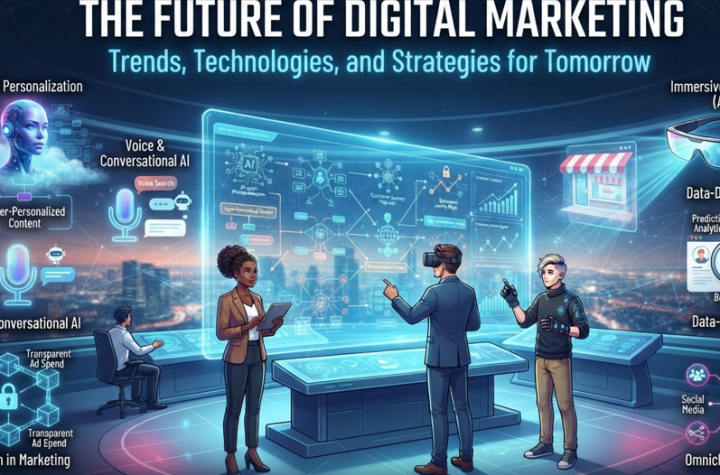
The Future of Digital Marketing: How AI is Driving Better Results
The Rise of Zero-Click Marketing: How Brands Stay Visible Without Website Visits
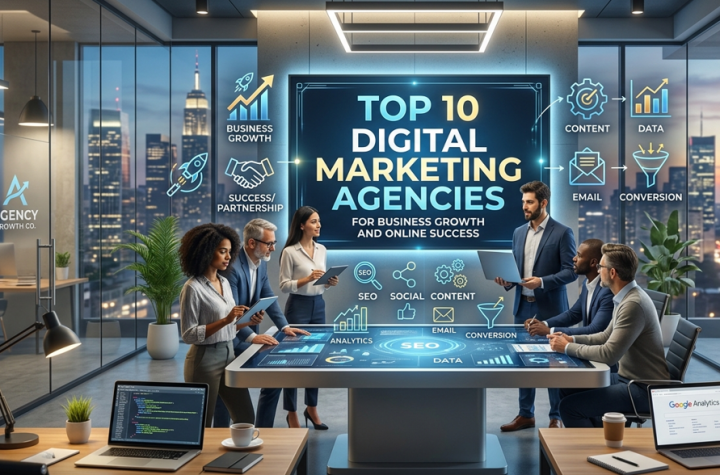
Top 10 Digital Marketing Agencies for Business Growth and Online Success